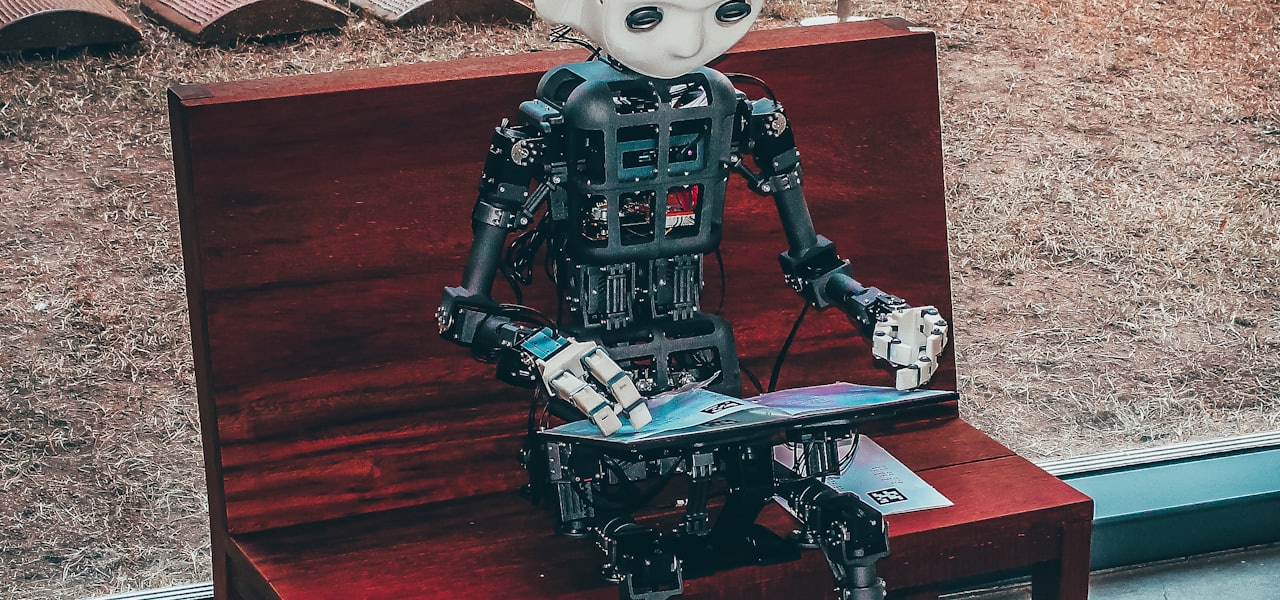
An AI takeover is a theorized future event, often depicted in fiction, in which autonomous artificial intelligence systems acquire the capability to supersede human decisions. This could occur through economic manipulation, infrastructure control, or direct intervention, leading to de facto governance. Scenarios range from gradual economic dominance, as automation supplants the human workforce, up to a sudden or aggressive global takeover by a robot uprising or other forms of rogue AI. Stories of AI takeovers have been popular throughout science fiction. Commentators argue that recent advancements in the field have heightened concern about such scenarios. In public debate, prominent figures such as Stephen Hawking have advocated research into precautionary measures to ensure future superintelligent machines remain under human control. == Types == === Automation of the economy === The traditional consensus among economists has been that technological progress does not cause long-term unemployment. However, recent innovation in the fields of robotics and artificial intelligence has raised worries that human labor will become obsolete, leaving workers in some sectors without employment. Many small and medium-sized firms may also be forced to close if they cannot afford or license the latest robotic and AI technology, and may need to focus on areas or services that cannot easily be replaced for continued viability in the face of such technology. ==== Technologies that may displace workers ==== While these technologies have replaced some traditional workers, they also create new opportunities. Industries that are most susceptible to AI-driven automation include transportation, retail, and the military. AI military technologies, for example, can reduce risk by enabling remote operation. A study in 2024 highlights AI's ability to perform routine and repetitive tasks poses significant risks of job displacement, especially in sectors like manufacturing and administrative support. Author Dave Bond argues that as AI technologies continue to develop and expand, the relationship between humans and robots will change; they will become closely integrated in several aspects of life. AI will likely displace some workers while creating opportunities for new jobs in other sectors, especially in fields where tasks are repeatable. Researchers from Stanford's Digital Economy Lab reported in 2025 that since the widespread adoption of generative AI in late 2022, early-career workers (ages 22–25) in the most AI-exposed occupations have experienced a 13 percent relative decline in employment—even after controlling for firm-level shocks—while overall employment has continued to grow robustly. The study further finds that job losses are concentrated in roles where AI automates routine tasks, whereas occupations that leverage AI to augment human work have seen stable or increasing employment. ==== Computer-integrated manufacturing ==== Computer-integrated manufacturing uses computers to control the production process. This allows individual processes to exchange information with each other and initiate actions. Although manufacturing can be faster and less error-prone through the integration of computers, the main advantage is the ability to create automated manufacturing processes. Computer-integrated manufacturing is used in automotive, aviation, space, and shipbuilding industries. ==== White-collar machines ==== The 21st century has seen a variety of skilled tasks partially taken over by machines, including translation, legal research, and journalism. Care work, entertainment, and other tasks requiring empathy, previously thought safe from automation, are increasingly performed by robots and AI systems. ==== Autonomous cars ==== An autonomous car is a vehicle that is capable of sensing its environment and navigating without human input. Many such vehicles are operational and others are being developed, with legislation rapidly expanding to allow their use. Obstacles to widespread adoption of autonomous vehicles have included concerns about the resulting loss of driving-related jobs in the road transport industry, and safety concerns. On March 18, 2018, a pedestrian was struck and killed in Tempe, Arizona by an Uber self-driving car. ==== AI-generated content ==== In the 2020s, automated content became more relevant due to technological advancements in AI models, such as ChatGPT, DALL-E, and Stable Diffusion. In most cases, AI-generated content such as imagery, literature, and music are produced through text prompts. These AI models are sometimes integrated into creative programs. AI-generated art may sample and conglomerate existing creative works, producing results that appear similar to human-made content. Low-quality AI-generated visual artwork can be informally referred to as AI slop. Some artists use a tool called Nightshade that alters images to make them detrimental to the training of text-to-image models if scraped without permission, while still looking normal to humans. AI-generated images are a potential tool for scammers and those looking to gain followers on social media, either to impersonate a famous individual or group or to monetize their audience. The New York Times has sued OpenAI, alleging copyright infringement related to the training and outputs of its AI models. === Eradication === Scientists such as Stephen Hawking are confident that superhuman artificial intelligence is physically possible, stating "there is no physical law precluding particles from being organised in ways that perform even more advanced computations than the arrangements of particles in human brains". According to Nick Bostrom, a superintelligent machine would not necessarily be motivated by the same emotional desire to collect power that often drives human beings but might rather treat power as a means toward attaining its ultimate goals; taking over the world would both increase its access to resources and help to prevent other agents from stopping the machine's plans. As a simplified example, a paperclip maximizer designed solely to create as many paperclips as possible would want to take over the world so that it can use all of the world's resources to create as many paperclips as possible, and, additionally, prevent humans from shutting it down or using those resources on things other than paperclips. There are debates on how realistic AI takeover scenarios are. According to a 2026 research paper, many of the arguments about existential risks are based on speculative assumptions about how intelligent AI systems could become, how they would behave and what goals they might develop over time. A 2023 Reuters/Ipsos survey showed that 61% of American adults feared AI could pose a threat to civilization. Philosopher Niels Wilde refutes the common thread that artificial intelligence inherently presents a looming threat to humanity, stating that these fears stem from perceived intelligence and lack of transparency in AI systems that more closely reflects the human aspects of it rather than those of a machine. AI alignment research studies how to design AI systems so that they follow intended objectives. == Debate == Physicist Stephen Hawking, Microsoft founder Bill Gates, and SpaceX founder Elon Musk have expressed concerns about the possibility that AI could develop to the point that humans could not control it, with Hawking theorizing that this could "spell the end of the human race". Stephen Hawking said in 2014 that "Success in creating AI would be the biggest event in human history. Unfortunately, it might also be the last, unless we learn how to avoid the risks." Hawking believed that in the coming decades, AI could offer "incalculable benefits and risks" such as "technology outsmarting financial markets, out-inventing human researchers, out-manipulating human leaders, and developing weapons we cannot even understand." In January 2015, Nick Bostrom joined Stephen Hawking, Max Tegmark, Elon Musk, Lord Martin Rees, Jaan Tallinn, and numerous AI researchers in signing the Future of Life Institute's open letter speaking to the potential risks and benefits associated with artificial intelligence. The signatories "believe that research on how to make AI systems robust and beneficial is both important and timely, and that there are concrete research directions that can be pursued today." Some focus has been placed on the development of trustworthy AI. Three statements have been posed as to why AI is not inherently trustworthy: 1. An entity X is trustworthy only if X has the right motivations, goodwill and/or adheres to moral obligations towards the trustor; 2. AI systems lack motivations, goodwill, and moral obligations; 3. Therefore, AI systems cannot be trustworthy. There are additional considerations within this framework of trustworthy AI that go further into the fields of explainable artificial intelligence and respect for human privacy. Zanotti and colleagues
Baby Bundle (app)
Baby Bundle is a parenting mobile app for iPhone and iPad. It was designed to help new parents through pregnancy and the first two years of parenthood. Developed in collaboration with medical experts, it helps track and record the child's development and growth, offers parental advice, manages vaccinations and health check-ups, stores photos and provides baby monitoring services. == History == Baby Bundle was founded in the United Kingdom by brothers, Nick and Anthony von Christierson. Each worked in investment banking prior to developing Baby Bundle, Nick at Greenhill & Co., and Anthony at Goldman Sachs. The idea for the app came when a friend's wife voiced her frustration over having multiple parenting apps on her smartphone. Nick and Anthony left their jobs to create a single app that would include all those features. They conducted market research by interviewing more than 500 parents in the UK and US. It took them a year to build the app, which was named by their mother. Looking for endorsement, they first went to the US in 2013 and partnered with parenting expert and pediatrician Dr. Jennifer Trachtenberg. Baby Bundle was launched in the US and Canadian App Stores in April 2014. In the same month, it became the #1 parenting app in iTunes and was featured by Apple as the #1 Editor's pick across all categories. Mashable called it one of the "Top 5 Can’t Miss Apps." Baby Bundle raised $1.8m seed round in March 2015 to fund development. The money came from a range of angel investors from across the US, UK and Asia. The von Christierson brothers have signed a deal to co-brand the app in the Middle East and expect to launch in Europe and Africa. == Features == Baby Bundle is an app for both the iPhone or iPad and provides smart monitoring tools and trackers for pregnancy and child development. It acts as a growth and daily activity tracker and offers parental advice, manages vaccinations and health check-ups. It has a parenting guide with tips and advice on what to expect when the baby arrives. An interactive forum also lets parents ask questions from others in the community. The app is free and also include paid premium features like the ability to turn two iPhones running into a baby monitor, a cloud service to share the child's data with a spouse and the ability to store data on more than one baby.
Jean Véronis
Jean Véronis (3 June 1955 – 8 September 2013) was a French linguist, computer scientist and blogger, and a research professor at Aix-Marseille University. His research interests included natural language processing, text mining and standardisation. He was a founder of the field that is now called digital humanities. In 2006, his blog was listed among the 15 most influential by Le Monde.
MRF optimization via dual decomposition
In dual decomposition a problem is broken into smaller subproblems and a solution to the relaxed problem is found. This method can be employed for MRF optimization. Dual decomposition is applied to markov logic programs as an inference technique. == Background == Discrete MRF Optimization (inference) is very important in Machine Learning and Computer vision, which is realized on CUDA graphical processing units. Consider a graph G = ( V , E ) {\displaystyle G=(V,E)} with nodes V {\displaystyle V} and Edges E {\displaystyle E} . The goal is to assign a label l p {\displaystyle l_{p}} to each p ∈ V {\displaystyle p\in V} so that the MRF Energy is minimized: (1) min Σ p ∈ V θ p ( l p ) + Σ p q ∈ ε θ p q ( l p ) ( l q ) {\displaystyle \min \Sigma _{p\in V}\theta _{p}(l_{p})+\Sigma _{pq\in \varepsilon }\theta _{pq}(l_{p})(l_{q})} Major MRF Optimization methods are based on Graph cuts or Message passing. They rely on the following integer linear programming formulation (2) min x E ( θ , x ) = θ . x = ∑ p ∈ V θ p . x p + ∑ p q ∈ ε θ p q . x p q {\displaystyle \min _{x}E(\theta ,x)=\theta .x=\sum _{p\in V}\theta _{p}.x_{p}+\sum _{pq\in \varepsilon }\theta _{pq}.x_{pq}} In many applications, the MRF-variables are {0,1}-variables that satisfy: x p ( l ) = 1 {\displaystyle x_{p}(l)=1} ⇔ {\displaystyle \Leftrightarrow } label l {\displaystyle l} is assigned to p {\displaystyle p} , while x p q ( l , l ′ ) = 1 {\displaystyle x_{pq}(l,l^{\prime })=1} , labels l , l ′ {\displaystyle l,l^{\prime }} are assigned to p , q {\displaystyle p,q} . == Dual Decomposition == The main idea behind decomposition is surprisingly simple: decompose your original complex problem into smaller solvable subproblems, extract a solution by cleverly combining the solutions from these subproblems. A sample problem to decompose: min x Σ i f i ( x ) {\displaystyle \min _{x}\Sigma _{i}f^{i}(x)} where x ∈ C {\displaystyle x\in C} In this problem, separately minimizing every single f i ( x ) {\displaystyle f^{i}(x)} over x {\displaystyle x} is easy; but minimizing their sum is a complex problem. So the problem needs to get decomposed using auxiliary variables { x i } {\displaystyle \{x^{i}\}} and the problem will be as follows: min { x i } , x Σ i f i ( x i ) {\displaystyle \min _{\{x^{i}\},x}\Sigma _{i}f^{i}(x^{i})} where x i ∈ C , x i = x {\displaystyle x^{i}\in C,x^{i}=x} Now we can relax the constraints by multipliers { λ i } {\displaystyle \{\lambda ^{i}\}} which gives us the following Lagrangian dual function: g ( { λ i } ) = min { x i ∈ C } , x Σ i f i ( x i ) + Σ i λ i . ( x i − x ) = min { x i ∈ C } , x Σ i [ f i ( x i ) + λ i . x i ] − ( Σ i λ i ) x {\displaystyle g(\{\lambda ^{i}\})=\min _{\{x^{i}\in C\},x}\Sigma _{i}f^{i}(x^{i})+\Sigma _{i}\lambda ^{i}.(x^{i}-x)=\min _{\{x^{i}\in C\},x}\Sigma _{i}[f^{i}(x^{i})+\lambda ^{i}.x^{i}]-(\Sigma _{i}\lambda ^{i})x} Now we eliminate x {\displaystyle x} from the dual function by minimizing over x {\displaystyle x} and dual function becomes: g ( { λ i } ) = min { x i ∈ C } Σ i [ f i ( x i ) + λ i . x i ] {\displaystyle g(\{\lambda ^{i}\})=\min _{\{x^{i}\in C\}}\Sigma _{i}[f^{i}(x^{i})+\lambda ^{i}.x^{i}]} We can set up a Lagrangian dual problem: (3) max { λ i } ∈ Λ g ( λ i ) = Σ i g i ( x i ) , {\displaystyle \max _{\{\lambda ^{i}\}\in \Lambda }g({\lambda ^{i}})=\Sigma _{i}g^{i}(x^{i}),} The Master problem (4) g i ( x i ) = m i n x i f i ( x i ) + λ i . x i {\displaystyle g^{i}(x^{i})=min_{x^{i}}f^{i}(x^{i})+\lambda ^{i}.x^{i}} where x i ∈ C {\displaystyle x^{i}\in C} The Slave problems == MRF optimization via Dual Decomposition == The original MRF optimization problem is NP-hard and we need to transform it into something easier. τ {\displaystyle \tau } is a set of sub-trees of graph G {\displaystyle G} where its trees cover all nodes and edges of the main graph. And MRFs defined for every tree T {\displaystyle T} in τ {\displaystyle \tau } will be smaller. The vector of MRF parameters is θ T {\displaystyle \theta ^{T}} and the vector of MRF variables is x T {\displaystyle x^{T}} , these two are just smaller in comparison with original MRF vectors θ , x {\displaystyle \theta ,x} . For all vectors θ T {\displaystyle \theta ^{T}} we'll have the following: (5) ∑ T ∈ τ ( p ) θ p T = θ p , ∑ T ∈ τ ( p q ) θ p q T = θ p q . {\displaystyle \sum _{T\in \tau (p)}\theta _{p}^{T}=\theta _{p},\sum _{T\in \tau (pq)}\theta _{pq}^{T}=\theta _{pq}.} Where τ ( p ) {\displaystyle \tau (p)} and τ ( p q ) {\displaystyle \tau (pq)} denote all trees of τ {\displaystyle \tau } than contain node p {\displaystyle p} and edge p q {\displaystyle pq} respectively. We simply can write: (6) E ( θ , x ) = ∑ T ∈ τ E ( θ T , x T ) {\displaystyle E(\theta ,x)=\sum _{T\in \tau }E(\theta ^{T},x^{T})} And our constraints will be: (7) x T ∈ χ T , x T = x | T , ∀ T ∈ τ {\displaystyle x^{T}\in \chi ^{T},x^{T}=x_{|T},\forall T\in \tau } Our original MRF problem will become: (8) min { x T } , x Σ T ∈ τ E ( θ T , x T ) {\displaystyle \min _{\{x^{T}\},x}\Sigma _{T\in \tau }E(\theta ^{T},x^{T})} where x T ∈ χ T , ∀ T ∈ τ {\displaystyle x^{T}\in \chi ^{T},\forall T\in \tau } and x T ∈ x | T , ∀ T ∈ τ {\displaystyle x^{T}\in x_{|T},\forall T\in \tau } And we'll have the dual problem we were seeking: (9) max { λ T } ∈ Λ g ( { λ T } ) = ∑ T ∈ τ g T ( λ T ) , {\displaystyle \max _{\{\lambda ^{T}\}\in \Lambda }g(\{\lambda ^{T}\})=\sum _{T\in \tau }g^{T}(\lambda ^{T}),} The Master problem where each function g T ( . ) {\displaystyle g^{T}(.)} is defined as: (10) g T ( λ T ) = min x T E ( θ T + λ T , x T ) {\displaystyle g^{T}(\lambda ^{T})=\min _{x^{T}}E(\theta ^{T}+\lambda ^{T},x^{T})} where x T ∈ χ T {\displaystyle x^{T}\in \chi ^{T}} The Slave problems == Theoretical Properties == Theorem 1. Lagrangian relaxation (9) is equivalent to the LP relaxation of (2). min { x T } , x { E ( x , θ ) | x p T = s p , x T ∈ CONVEXHULL ( χ T ) } {\displaystyle \min _{\{x^{T}\},x}\{E(x,\theta )|x_{p}^{T}=s_{p},x^{T}\in {\text{CONVEXHULL}}(\chi ^{T})\}} Theorem 2. If the sequence of multipliers { α t } {\displaystyle \{\alpha _{t}\}} satisfies α t ≥ 0 , lim t → ∞ α t = 0 , ∑ t = 0 ∞ α t = ∞ {\displaystyle \alpha _{t}\geq 0,\lim _{t\to \infty }\alpha _{t}=0,\sum _{t=0}^{\infty }\alpha _{t}=\infty } then the algorithm converges to the optimal solution of (9). Theorem 3. The distance of the current solution { θ T } {\displaystyle \{\theta ^{T}\}} to the optimal solution { θ ¯ T } {\displaystyle \{{\bar {\theta }}^{T}\}} , which decreases at every iteration. Theorem 4. Any solution obtained by the method satisfies the WTA (weak tree agreement) condition. Theorem 5. For binary MRFs with sub-modular energies, the method computes a globally optimal solution.
Aslı Çelikyılmaz
Aslı Çelikyılmaz is an engineer specializing in natural language processing, and particularly in natural language generation for software agents with advanced reasoning and real-world modeling capabilities. Educated in Turkey and Canada, she works in the US as senior research lead at Fundamentals AI Research, Meta. She also holds an affiliate faculty position in computer science at the University of Washington, and is co-editor-in-chief of the journal Transactions of the Association for Computational Linguistics. == Education and career == Çelikyılmaz is a 1997 graduate of Istanbul Technical University, where she studied industrial engineering. After a 2002 master's degree in computer and information science from Seneca Polytechnic in Toronto, and a second master's degree in information science from the University of Toronto in 2005, she completed a Ph.D. in information science at the University of Toronto in 2008. She worked as a postdoctoral researcher in California, at the University of California, Berkeley, from 2008 to 2010. In 2010 she joined Microsoft in Sunnyvale, California, where she became a senior scientist and later a senior principal researcher in Redmond, Washington. She added her affiliation with the University of Washington in 2018, and moved to Meta in Seattle in 2021. == Recognition == Çelikyılmaz was named to the 2026 class of IEEE Fellows, "for contributions to conversational systems and language generation".
Data annotation
Data annotation is the process of labeling or tagging relevant metadata within a dataset to enable machines to interpret the data accurately. The dataset can take various forms, including images, audio files, video footage, or text. == Applications == Data is a fundamental component in the development of artificial intelligence (AI). Training AI models, particularly in computer vision and natural language processing, requires large volumes of annotated data. Proper annotation ensures that machine learning algorithms can recognize patterns and make accurate predictions. Common types of data annotation include classification, bounding boxes, semantic segmentation, and keypoint annotation. Data annotation is used in AI-driven fields, including healthcare, autonomous vehicles, retail, security, and entertainment. By accurately labeling data, machine learning models can perform complex tasks such as object detection, sentiment analysis, and speech recognition with greater precision. This growing demand has led to the emergence of specialized sectors and platforms dedicated to AI training and human-in-the-loop workflows, which often utilize Reinforcement Learning from Human Feedback (RLHF) to refine model behavior. == In computer vision == === Image classification === Image classification, also known as image categorization, involves assigning predefined labels to images. Machine learning algorithms trained on classified images can later recognize objects and differentiate between categories. For instance, an AI model trained to recognize furniture styles can distinguish between Georgian and Rococo armchairs. === Semantic segmentation === Semantic segmentation assigns each pixel in an image to a specific class, such as trees, vehicles, humans, or buildings. This type of annotation enables machine learning models to differentiate objects by grouping similar pixels, allowing for a detailed understanding of an image. === Bounding boxes === Bounding box annotation involves drawing rectangular boxes around objects in an image. This technique is commonly used in autonomous driving, security surveillance, and retail analytics to detect and classify objects such as pedestrians, vehicles, and products on store shelves. === 3D cuboids === 3D cuboid annotation enhances traditional bounding boxes by adding depth, enabling models to predict an object's spatial orientation, movement, and size. This method is particularly useful for autonomous vehicles and robotics, where understanding object dimensions and depth is critical. === Polygonal annotation === For objects with irregular shapes, such as curved or multi-sided items, polygonal annotation provides more precise labeling than bounding boxes. This technique is often used in applications that require detailed object recognition, such as medical imaging or aerial mapping. === Keypoint annotation === Keypoint annotation marks specific points on an object, such as facial landmarks or body joints, to enable tracking and motion analysis. This method is widely used in facial recognition, emotion detection, sports analytics, and augmented reality applications.
Is an AI Virtual Assistant Worth It in 2026?
Shopping for the best AI virtual assistant? An AI virtual assistant is software that uses machine learning to help you get more done — it keeps getting smarter as the underlying models improve. Pricing, accuracy, and the size of the model behind the tool are the three factors that most affect daily usefulness. Whether you are a beginner or a pro, the right AI virtual assistant slots into your workflow and pays for itself fast. Below we compare features, pricing, and real output so you can choose with confidence.