Aslı Çelikyılmaz is an engineer specializing in natural language processing, and particularly in natural language generation for software agents with advanced reasoning and real-world modeling capabilities. Educated in Turkey and Canada, she works in the US as senior research lead at Fundamentals AI Research, Meta. She also holds an affiliate faculty position in computer science at the University of Washington, and is co-editor-in-chief of the journal Transactions of the Association for Computational Linguistics. == Education and career == Çelikyılmaz is a 1997 graduate of Istanbul Technical University, where she studied industrial engineering. After a 2002 master's degree in computer and information science from Seneca Polytechnic in Toronto, and a second master's degree in information science from the University of Toronto in 2005, she completed a Ph.D. in information science at the University of Toronto in 2008. She worked as a postdoctoral researcher in California, at the University of California, Berkeley, from 2008 to 2010. In 2010 she joined Microsoft in Sunnyvale, California, where she became a senior scientist and later a senior principal researcher in Redmond, Washington. She added her affiliation with the University of Washington in 2018, and moved to Meta in Seattle in 2021. == Recognition == Çelikyılmaz was named to the 2026 class of IEEE Fellows, "for contributions to conversational systems and language generation".
Human–robot collaboration
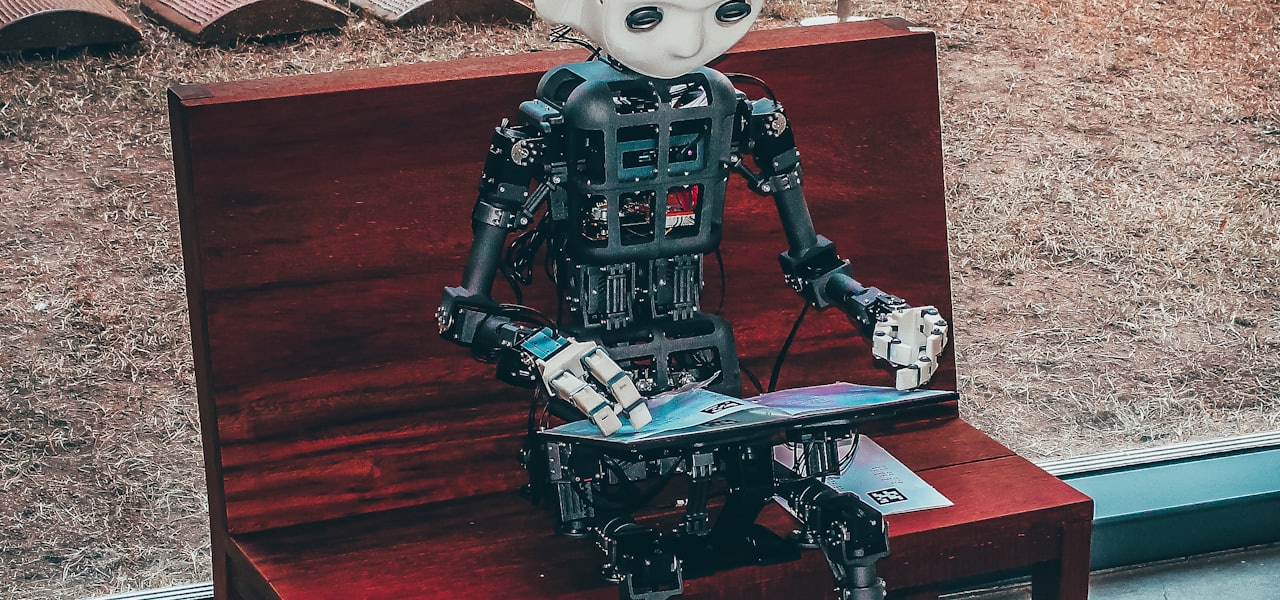
Human-Robot Collaboration is the study of collaborative processes in human and robot agents work together to achieve shared goals. Many new applications for robots require them to work alongside people as capable members of human-robot teams. These include robots for homes, hospitals, and offices, space exploration and manufacturing. Human-Robot Collaboration (HRC) is an interdisciplinary research area comprising classical robotics, human-computer interaction, artificial intelligence, process design, layout planning, ergonomics, cognitive sciences, and psychology. Industrial applications of human-robot collaboration involve Collaborative Robots, or cobots, that physically interact with humans in a shared workspace to complete tasks such as collaborative manipulation or object handovers. == Collaborative Activity == Collaboration is defined as a special type of coordinated activity, one in which two or more agents work jointly with each other, together performing a task or carrying out the activities needed to satisfy a shared goal. The process typically involves shared plans, shared norms and mutually beneficial interactions. Although collaboration and cooperation are often used interchangeably, collaboration differs from cooperation as it involves a shared goal and joint action where the success of both parties depend on each other. For effective human-robot collaboration, it is imperative that the robot is capable of understanding and interpreting several communication mechanisms similar to the mechanisms involved in human-human interaction. The robot must also communicate its own set of intents and goals to establish and maintain a set of shared beliefs and to coordinate its actions to execute the shared plan. In addition, all team members demonstrate commitment to doing their own part, to the others doing theirs, and to the success of the overall task. == Theories Informing Human-Robot Collaboration == Human-human collaborative activities are studied in depth in order to identify the characteristics that enable humans to successfully work together. These activity models usually aim to understand how people work together in teams, how they form intentions and achieve a joint goal. Theories on collaboration inform human-robot collaboration research to develop efficient and fluent collaborative agents. === Belief Desire Intention Model === The belief-desire-intention (BDI) model is a model of human practical reasoning that was originally developed by Michael Bratman. The approach is used in intelligent agents research to describe and model intelligent agents. The BDI model is characterized by the implementation of an agent's beliefs (the knowledge of the world, state of the world), desires (the objective to accomplish, desired end state) and intentions (the course of actions currently under execution to achieve the desire of the agent) in order to deliberate their decision-making processes. BDI agents are able to deliberate about plans, select plans and execute plans. === Shared Cooperative Activity === Shared Cooperative Activity defines certain prerequisites for an activity to be considered shared and cooperative: mutual responsiveness, commitment to the joint activity and commitment to mutual support. An example case to illustrate these concepts would be a collaborative activity where agents are moving a table out the door, mutual responsiveness ensures that movements of the agents are synchronized; a commitment to the joint activity reassures each team member that the other will not at some point drop his side; and a commitment to mutual support deals with possible breakdowns due to one team member's inability to perform part of the plan. === Joint Intention Theory === Joint Intention Theory proposes that for joint action to emerge, team members must communicate to maintain a set of shared beliefs and to coordinate their actions towards the shared plan. In collaborative work, agents should be able to count on the commitment of other members, therefore each agent should inform the others when they reach the conclusion that a goal is achievable, impossible, or irrelevant. == Approaches to Human-Robot Collaboration == The approaches to human-robot collaboration include human emulation (HE) and human complementary (HC) approaches. Although these approaches have differences, there are research efforts to develop a unified approach stemming from potential convergences such as Collaborative Control. === Human Emulation === The human emulation approach aims to enable computers to act like humans or have human-like abilities in order to collaborate with humans. It focuses on developing formal models of human-human collaboration and applying these models to human-computer collaboration. In this approach, humans are viewed as rational agents who form and execute plans for achieving their goals and infer other people's plans. Agents are required to infer the goals and plans of other agents, and collaborative behavior consists of helping other agents to achieve their goals. === Human Complementary === The human complementary approach seeks to improve human-computer interaction by making the computer a more intelligent partner that complements and collaborates with humans. The premise is that the computer and humans have fundamentally asymmetric abilities. Therefore, researchers invent interaction paradigms that divide responsibility between human users and computer systems by assigning distinct roles that exploit the strengths and overcome the weaknesses of both partners. == Key Aspects == Specialization of Roles: Based on the level of autonomy and intervention, there are several human-robot relationships including master-slave, supervisor–subordinate, partner–partner, teacher–learner and fully autonomous robot. In addition to these roles, homotopy (a weighting function that allows a continuous change between leader and follower behaviors) was introduced as a flexible role distribution. Establishing shared goal(s): Through direct discussion about goals or inference from statements and actions, agents must determine the shared goals they are trying to achieve. Allocation of Responsibility and Coordination: Agents must decide how to achieve their goals, determine what actions will be done by each agent, and how to coordinate the actions of individual agents and integrate their results. Shared context: Agents must be able to track progress toward their goals. They must keep track of what has been achieved and what remains to be done. They must evaluate the effects of actions and determine whether an acceptable solution has been achieved. Communication: Any collaboration requires communication to define goals, negotiate over how to proceed and who will do what, and evaluate progress and results. Adaptation and learning: Collaboration over time require partners to adapt themselves to each other and learn from one's partner both directly or indirectly. Time and space: The time-space taxonomy divides human-robot interaction into four categories based on whether the humans and robots are using computing systems at the same time (synchronous) or different times (asynchronous) and while in the same place (collocated) or in different places (non-collocated). Ergonomics: Human factors and ergonomics are one of the key aspects for a sustainable human-robot collaboration. The robot control system can use biomechanical models and sensors to optimize various ergonomic metrics, such as muscle fatigue.
Echo Lake (software)
Echo Lake (AKA Family Album Creator) was the most notable multimedia software product produced by Delrina, which debuted in June 1995. It was touted internally as a "cross [of] Quark Xpress and Myst". It featured an immersive 3D environment where a user could go to a virtual desktop in a virtual office and assemble video and audio clips along with images, and then print them out as either a virtual book other users of the program could use, or for print. It was a highly innovative product for its time, and ultimately was hampered by the inability of many users able to input their own multimedia content easily into a computer from that period. Creative Wonders bought the rights to the Echo Lake multimedia product, which was re-shaped as an introductory program on multimedia and re-released as Family Album Creator in 1996.
ArcSoft ShowBiz
ShowBiz is a video editor by ArcSoft for the Windows operating system. It can create VCD and DVDs and can also export to the formats AVI, MPEG, WMV, and MOV. ShowBiz also contains a DVD burning and menu building feature. As of 2003, it was one of the three most dominant bundled titles. == Reception == PC Magazine reviewer Jan Ozer states: "ArcSoft's ShowBiz has evolved into a competent editor that's generally more usable than Dazzle's MovieStar program, providing more configuration controls, better preview features, and a much greater range of fun effects." John Virata, senior editor of Digital Media Online, says in his three page review of ShowBiz DVD 2, "It is an easy editor to work with and has a logically laid out interface that takes you step by step through the video creation and DVD creation process"
Comparison of user features of messaging platforms
Comparison of user features of messaging platforms refers to a comparison of all the various user features of various electronic instant messaging platforms. This includes a wide variety of resources; it includes standalone apps, platforms within websites, computer software, and various internal functions available on specific devices, such as iMessage for iPhones. This entry includes only the features and functions that shape the user experience for such apps. A comparison of the underlying system components, programming aspects, and other internal technical information, is outside the scope of this entry. == Overview and background == Instant messaging technology is a type of online chat that offers real-time text transmission over the Internet. A LAN messenger operates in a similar way over a local area network. Short messages are typically transmitted between two parties when each user chooses to complete a thought and select "send". Some IM applications can use push technology to provide real-time text, which transmits messages character by character, as they are composed. More advanced instant messaging can add file transfer, clickable hyperlinks, Voice over IP, or video chat. Non-IM types of chat include multicast transmission, usually referred to as "chat rooms", where participants might be anonymous or might be previously known to each other (for example collaborators on a project that is using chat to facilitate communication). Instant messaging systems tend to facilitate connections between specified known users (often using a contact list also known as a "buddy list" or "friend list"). Depending on the IM protocol, the technical architecture can be peer-to-peer (direct point-to-point transmission) or client-server (an Instant message service center retransmits messages from the sender to the communication device). By 2010, instant messaging over the Web was in sharp decline, in favor of messaging features on social networks. The most popular IM platforms were terminated, such as AIM which closed down and Windows Live Messenger which merged into Skype. Instant messaging has since seen a revival in popularity in the form of "messaging apps" (usually on mobile devices) which by 2014 had more users than social networks. As of 2010, social networking providers often offer IM abilities. Facebook Chat is a form of instant messaging, and Twitter can be thought of as a Web 2.0 instant messaging system. Similar server-side chat features are part of most dating websites, such as OkCupid or PlentyofFish. The spread of smartphones and similar devices in the late 2000s also caused increased competition with conventional instant messaging, by making text messaging services still more ubiquitous. Many instant messaging services offer video calling features, voice over IP and web conferencing services. Web conferencing services can integrate both video calling and instant messaging abilities. Some instant messaging companies are also offering desktop sharing, IP radio, and IPTV to the voice and video features. The term "Instant Messenger" is a service mark of Time Warner and may not be used in software not affiliated with AOL in the United States. For this reason, in April 2007, the instant messaging client formerly named Gaim (or gaim) announced that they would be renamed "Pidgin". In the 2010s, more people started to use messaging apps on modern computers and devices like WhatsApp, WeChat, Viber, Facebook Messenger, Telegram, Signal and Line rather than instant messaging on computers like AIM and Windows Live Messenger. For example, WhatsApp was founded in 2009, and Facebook acquired in 2014, by which time it already had half a billion users. === Concepts === ==== Backchannel ==== Backchannel is the practice of using networked computers to maintain a real-time online conversation alongside the primary group activity or live spoken remarks. The term was coined in the field of linguistics to describe listeners' behaviours during verbal communication. (See Backchannel (linguistics).) The term "backchannel" generally refers to online conversation about the conference topic or speaker. Occasionally backchannel provides audience members a chance to fact-check the presentation. First growing in popularity at technology conferences, backchannel is increasingly a factor in education where WiFi connections and laptop computers allow participants to use ordinary chat like IRC or AIM to actively communicate during presentation. More recent research include works where the backchannel is brought publicly visible, such as the ClassCommons, backchan.nl and Fragmented Social Mirror. Twitter is also widely used today by audiences to create backchannels during broadcasting of content or at conferences. For example, television drama, other forms of entertainment and magazine programs. This practice is often also called live tweeting. Many conferences nowadays also have a hashtag that can be used by the participants to share notes and experiences; furthermore such hashtags can be user generated. == Features == Various platforms and apps are distinguished by their strengths and features in regards to specific functions. === Group messaging === === Official channels === Some apps include a feature known as "official channels" which allows companies, especially news media outlets, publications, and other mass media companies, to offer an official channel, which users can join, and thereby receive regular updates, published articles, or news updates from companies or news outlets. Two apps which have a large amount of such channels available are Line and Telegram. === Video group calls === == Basic default platforms == Basic platforms which are common across entire categories of mobile devices, computers, or operating systems. === SMS === SMS (short message service) is a text messaging service component of most telephone, Internet, and mobile device systems. It uses standardized communication protocols to enable mobile devices to exchange short text messages. An intermediary service can facilitate a text-to-voice conversion to be sent to landlines. SMS, as used on modern devices, originated from radio telegraphy in radio memo pagers that used standardized phone protocols. These were defined in 1985 as part of the Global System for Mobile Communications (GSM) series of standards. The first test SMS message was sent on December 3, 1992, when Neil Papwort, a test engineer for Sema Group, used a personal computer to send "Merry Christmas" to the phone of colleague Richard Jarvis. It commercially rolled out to many cellular networks that decade. SMS became hugely popular worldwide as a way of text communication. By the end of 2010, SMS was the most widely used data application, with an estimated 3.5 billion active users, or about 80% of all mobile phone subscribers. The protocols allowed users to send and receive messages of up to 160 characters (when entirely alpha-numeric) to and from GSM mobiles. Although most SMS messages are sent from one mobile phone to another, support for the service has expanded to include other mobile technologies, such as ANSI CDMA networks and Digital AMPS. Mobile marketing, a type of direct marketing, uses SMS. According to a 2018 market research report the global SMS messaging business was estimated to be worth over US$100 billion, accounting for almost 50 percent of all the revenue generated by mobile messaging. A Flash SMS is a type of SMS that appears directly on the main screen without user interaction and is not automatically stored in the inbox. It can be useful in emergencies, such as a fire alarm or cases of confidentiality, as in delivering one-time passwords. ==== Threaded SMS format ==== Threaded SMS is a visual styling orientation of SMS message history that arranges messages to and from a contact in chronological order on a single screen. It was first invented by a developer working to implement the SMS client for the BlackBerry, who was looking to make use of the blank screen left below the message on a device with a larger screen capable of displaying far more than the usual 160 characters, and was inspired by threaded Reply conversations in email. Visually, this style of representation provides a back-and-forth chat-like history for each individual contact. Hierarchical-threading at the conversation-level (as typical in blogs and on-line messaging boards) is not widely supported by SMS messaging clients. This limitation is due to the fact that there is no session identifier or subject-line passed back and forth between sent and received messages in the header data (as specified by SMS protocol) from which the client device can properly thread an incoming message to a specific dialogue, or even to a specific message within a dialogue. Most smart phone text-messaging-clients are able to create some contextual threading of "group messages" which narrows the context of the thread around the common interests shared by
Document mosaicing
Document mosaicing is a process that stitches multiple, overlapping snapshot images of a document together to produce one large, high resolution composite. The document is slid under a stationary, over-the-desk camera by hand until all parts of the document are snapshotted by the camera's field of view. As the document slid under the camera, all motion of the document is coarsely tracked by the vision system. The document is periodically snapshotted such that the successive snapshots are overlap by about 50%. The system then finds the overlapped pairs and stitches them together repeatedly until all pairs are stitched together as one piece of document. The document mosaicing can be divided into four main processes. Tracking Feature detecting Correspondences establishing Images mosaicing. == Tracking (simple correlation process) == In this process, the motion of the document slid under the camera is coarsely tracked by the system. Tracking is performed by a process called simple correlation process. In the first frame of snapshots, a small patch is extracted from the center of the image as a correlation template. The correlation process is performed in the four times size of the patch area of the next frame. The motion of the paper is indicated by the peak in the correlation function. The peak in the correlation function indicates the motion of the paper. The template is resampled from this frame and the tracking continues until the template reaches the edge of the document. After the template reaches the edge of the document, another snapshot is taken and the tracking process performs repeatedly until the whole document is imaged. The snapshots are stored in an ordered list to facilitate pairing the overlapped images in later processes. == Feature detecting for efficient matching == Feature detection is the process of finding the transformation that aligns one image with another. There are two main approaches for feature detection. Feature-based approach : Motion parameters are estimated from point correspondences. This approach is suitable for the case that there is plenty supply of stable and detectable features. Featureless approach : When the motion between the two images is small, the motion parameters are estimated using optical flow. On the other hand, when the motion between the two images is large, the motion parameters are estimated using generalised cross-correlation. However, this approach requires a computationally expensive resources. Each image is segmented into a hierarchy of columns, lines, and words to match the organised sets of features across images. Skew angle estimation and columns, lines and words finding are the examples of feature detection operations. === Skew angle estimation === Firstly, the angle that the rows of text make with the image raster lines (skew angle) is estimated. It is assumed to lie in the range of ±20°. A small patch of text in the image is selected randomly and then rotated in the range of ±20° until the variance of the pixel intensities of the patch summed along the raster lines is maximised. To ensure that the found skew angle is accurate, the document mosaic system performs calculation at many image patches and derive the final estimation by finding the average of the individual angles weighted by the variance of the pixel intensities of each patch. === Columns, lines and words finding === In this operation, the de-skewed document is intuitively segmented into a hierarchy of columns, lines and words. The sensitivity to illumination and page coloration of the de-skewed document can be removed by applying a Sobel operator to the de-skewed image and thresholding the output to obtain the binary gradient, de-skewed image. The operation can be roughly separated into 3 steps: column segmentation, line segmentation and word segmentation. Columns are easily segmented from the binary gradient, de-skewed images by summing pixels vertically. Baselines of each row are segmented in the same way as the column segmentation process but horizontally. Finally, individual words are segmented by applying the vertical process at each segmented row. These segmentations are important because the document mosaic is created by matching the lower right corners of words in overlapping images pair. Moreover, the segmentation operation can organize the list of images in the context of a hierarchy of rows and column reliably. The segmentation operation involves a considerable amount of summing in the binary gradient, de-skewed images, which done by construct a matrix of partial sums whose elements are given by p i y = ∑ u = 1 i ∑ v = 1 j b u v {\displaystyle p_{iy}=\sum _{u=1}^{i}\sum _{v=1}^{j}b_{uv}} The matrix of partial sums is calculated in one pass through the binary gradient, de-skewed image. ∑ u = u 1 u 2 ∑ v = v 1 v 2 b u v = p u 2 v 2 + p u 1 v 1 − p u 1 v 2 − p u 2 v 1 {\displaystyle \sum _{u=u_{1}}^{u_{2}}\sum _{v=v_{1}}^{v_{2}}b_{uv}=p_{u_{2}v_{2}}+p_{u_{1}v_{1}}-p_{u_{1}v_{2}}-p_{u_{2}v_{1}}} == Correspondences establishing == The two images are now organized in hierarchy of linked lists in following structure : image=list of columns row=list of words column=list of row word=length (in pixels) At the bottom of the structure, the length of each word is recorded for establishing correspondence between two images to reduce to search only the corresponding structures for the groups of words with the matching lengths. === Seed match finding === A seed match finding is done by comparing each row in image1 with each row in image2. The two rows are then compared to each other by every word. If the length (in pixel) of the two words (one from image1 and one from image2) and their immediate neighbours agree with each other within a predefined tolerance threshold (5 pixels, for example), then they are assumed to match. The row of each image is assumed a match if there are three or more word matches between the two rows. The seed match finding operation is terminated when two pairs of consecutive row match are found. === Match list building === After finishing a seed match finding operation, the next process is to build the match list to generate the correspondences points of the two images. The process is done by searching the matching pairs of rows away from the seed row. == Images mosaicing == Given the list of corresponding points of the two images, finding the transformation of the overlapping portion of the images is the next process. Assuming a pinhole camera model, the transformation between pixels (u,v) of image 1 and pixels (u0, v0) of image 2 is demonstrated by a plane-to-plane projectivity. [ s u ′ s v ′ s ] = [ p 11 p 12 p 13 p 21 p 22 p 23 p 31 p 32 1 ] [ u v 1 ] E q .1 {\displaystyle \left[{\begin{array}{c}su'\\sv'\\s\end{array}}\right]=\left[{\begin{array}{ccc}p_{11}&p_{12}&p_{13}\\p_{21}&p_{22}&p_{23}\\p_{31}&p_{32}&1\end{array}}\right]\left[{\begin{array}{c}u\\v\\1\end{array}}\right]\qquad Eq.1} The parameters of the projectivity is found from four pairs of matching points. RANSAC regression technique is used to reject outlying matches and estimate the projectivity from the remaining good matches. The projectivity is fine-tuned using correlation at the corners of the overlapping portion to obtain four correspondences to sub-pixel accuracy. Therefore, image1 is then transformed into image2's coordinate system using Eq.1. The typical result of the process is shown in Figure 5. === Many images coping === Finally, the whole page composition is built up by mapping all the images into the coordinate system of an "anchor" image, which is normally the one nearest the page center. The transformations to the anchor frame are calculated by concatenating the pair-wise transformations found earlier. The raw document mosaic is shown in Figure 6. However, there might be a problem of non-consecutive images that are overlap. This problem can be solved by performing Hierarchical sub-mosaics. As shown in Figure 7, image1 and image2 are registered, as are image3 and image4, creating two sub-mosaics. These two sub-mosaics are later stitched together in another mosaicing process. == Applied areas == There are various areas that the technique of document mosaicing can be applied to such as : Text segmentation of images of documents Document Recognition Interaction with paper on the digital desk Video mosaics for virtual environments Image registration techniques == Relevant research papers == Huang, T.S.; Netravali, A.N. (1994). "Motion and structure from feature correspondences: A review". Proceedings of the IEEE. 82 (2): 252–268. doi:10.1109/5.265351. D.G. Lowe. [1] Perceptual Organization and Visual Recognition. Kluwer Academic Publishers, Boston, 1985. Irani, M.; Peleg, S. (1991). "Improving resolution by image registration". CVGIP: Graphical Models and Image Processing. 53 (3): 231–239. doi:10.1016/1049-9652(91)90045-L. S2CID 4834546. Shivakumara, P.; Kumar, G. Hemantha; Guru, D. S.; Nagabhushan, P. (2006). "
Plotly
Plotly is a technical computing company headquartered in Montreal, Quebec, that develops online data analytics and visualization tools. Plotly provides online graphing, analytics, and statistics tools for individuals and collaboration, as well as scientific graphing libraries for Python, R, MATLAB, Perl, Julia, Arduino, JavaScript and REST. == History == Plotly was founded by Alex Johnson, Jack Parmer, Chris Parmer, and Matthew Sundquist. The founders' backgrounds are in science, energy, and data analysis and visualization. Early employees include Christophe Viau, a Canadian software engineer and Ben Postlethwaite, a Canadian geophysicist. Plotly was named one of the Top 20 Hottest Innovative Companies in Canada by the Canadian Innovation Exchange. Plotly was featured in "startup row" at PyCon 2013, and sponsored the SciPy 2018 conference. Plotly raised $5.5 million during its Series A funding, led by MHS Capital, Siemens Venture Capital, Rho Ventures, Real Ventures, and Silicon Valley Bank. The Boston Globe and Washington Post newsrooms have produced data journalism using Plotly. In 2020, Plotly was named a Best Place to Work by the Canadian SME National Business Awards, and nominated as Business of the Year. == Products == Plotly offers open-source and enterprise products. Dash is an open-source Python, R, and Julia framework for building web-based analytic applications. Many specialized open-source Dash libraries exist that are tailored for building domain-specific Dash components and applications. Some examples are Dash DAQ, for building data acquisition GUIs to use with scientific instruments, and Dash Bio, which enables users to build custom chart types, sequence analysis tools, and 3D rendering tools for bioinformatics applications. Dash Enterprise is Plotly's paid product for building, testing, deploying, managing and scaling Dash applications organization-wide. Chart Studio Cloud is a free, online tool for creating interactive graphs. It has a point-and-click graphical user interface for importing and analyzing data into a grid and using stats tools. Graphs can be embedded or downloaded. Chart Studio Enterprise is a paid product that allows teams to create, style, and share interactive graphs on a single platform. It offers expanded authentication and file export options, and does not limit sharing and viewing. Data visualization libraries Plotly.js is an open-source JavaScript library for creating graphs and powers Plotly.py for Python, as well as Plotly.R for R, MATLAB, Node.js, Julia, and Arduino and a REST API. Plotly can also be used to style interactive graphs with Jupyter notebook. Figure converters which convert matplotlib, ggplot2, and IGOR Pro graphs into interactive, online graphs. == Data visualization libraries == Plotly provides a collection of supported chart types across several programming languages: == Dash == Dash is a Python framework built on top of React, a JavaScript library. Dash also works for R, and most recently supports Julia. While still described as a Python framework, Python isn't used for the other languages: "... describing Dash as a Python framework misses a key feature of its design: the Python side (the back end/server) of Dash was built to be lightweight and stateless [allowing] multiple back-end languages to coexist on an equal footing". It is possible to integrate D3.js charts as Dash components. Dash provides the default CSS (plus HTML and JavaScript), but for custom styling Dash applications, CSS can be added, or Dash Enterprise used. === Dash Enterprise === Dash Enterprise is Plotly's paid product for building, testing, deploying, managing and scaling Dash applications organization-wide. The product integrates with enterprise IT systems to enable organizations to build, deploy and scale low-code Dash applications. With open-source Dash, analytic applications can be run from a local machine, but cannot be easily accessed by others in the organization. ==== Enterprise IT integration ==== Dash Enterprise installs on cloud environments and on-premises. Amazon Web Services, Google Cloud Platform, and Microsoft Azure are supported, as are multiple Linux on-premises servers. Authentication integrations include LDAP, AD, PKI, Okta, SAML, OAuth2, SSO, and email authentication, and Dash application access is managed through a GUI rather than code. Dash Enterprise connects to major big data backends, including Salesforce, PostgreSQL, Databricks via PySpark, Snowflake, Dask, Datashader, and Vaex. In 2020, Plotly partnered with NVIDIA to integrate Dash with RAPIDS, and NVIDIA participated in Plotly's Series C funding round. ==== Low-code capabilities ==== Dash Enterprise enables low-code development of Dash applications, which is not possible with open-source Dash. Enterprise users can write applications in multiple development environments, including Jupyter Notebook. Dash Enterprise ships with several “development engines” for drag-and-drop application editing, application design, and automated reporting, as well as dozens of artificial intelligence and machine learning application templates. ==== Deployment and scaling ==== Dash application code is deployed to Dash Enterprise using the git-push command. Dash application deployments are containerized to avoid dependency conflicts, and can be embedded in existing web platforms without iframes. Deployed applications can be managed and accessed in a single portal called App Manager, where administrators can control user authentication and view usage analytics. Dash Enterprise scales horizontally with Kubernetes. Jobs queuing, GPU acceleration, and CPU parallelization support high performance computing requirements. Plotly also offers professional services for application development and workshop training.