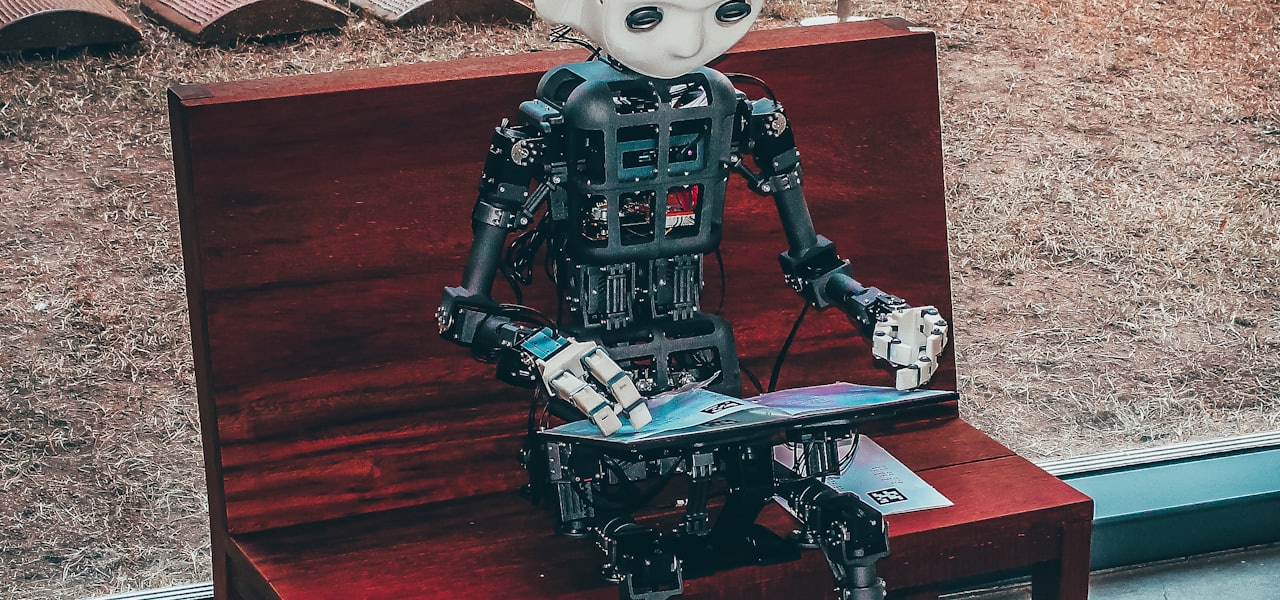
AI Avatar From Photo

AI Avatar From Photo — independent reviews, comparisons, pricing and step-by-step guides on Aizhi.

  • Continuous Function Chart

    Continuous Function Chart

    A Continuous Function Chart (CFC) is a graphic editor that can be used in conjunction with the STEP 7 software package or with other tools, such as CODESYS. It is used to create the entire software structure of the CPU from ready-made blocks. When working with the editor, you place blocks on function charts, assign parameters to them, and interconnect them. Interconnecting means, for example, that values are transferred from one output to one or more inputs during communication between the blocks. Continuous function charts are basically used for controlling continuous processes, where all the logic is executed and outputs are calculated in each PLC scan. Whereas in SFC, execution will be sequential as done is batch processes.

    Read more →
  • Pixorial

    Pixorial

    Pixorial was a cloud-based consumer photo sharing, video sharing and video editing platform. The company was formed in 2007 in Centennial, Colorado as a media conversion service. In 2013, Pixorial was chosen as one of two video storage companies to partner with the launch of Google Drive. Pixorial allowed users to edit and share videos on social channels by connecting through their Pixorial account. The company closed on July 18, 2014, and its assets were acquired by LifeLogger Technologies Corp in November 2015. == History == The company was founded in 2007 and launched in 2009 by former Netscape employee Andres Espineira. Changing its focus to video editing software in 2009, Pixorial began developing an app that would be launched for iOS and Android devices in 2011. Later developments in the app in 2012 would also included real time filters, which were later removed. With the launch of Google Drive in 2012, Pixorial was chosen as an integrated video partner. This integration with Google Drive allowed users to access videos stored in Google Drive within the web app of Pixorial. After the Google Drive launch, Pixorial developed a crowdsourced, location-based video sharing app, Krowds. The app was cited in July 2012 by PC Magazine as one of "The 8 Best Apps for Making and Sharing Videos on Your iPhone". In late July, Pixorial replaced its original mobile app with the MyPlayer HD app that optimized HD video viewing for large screen viewing including tablets and smart televisions. Pixorial's services terminated on July 18, 2014. == Products == === Krowds App === Pixorial's app was launched in April 2013 for iOS, and in May for Android, as a tool to aggregate event videos through location based collections. The app was launched to generally positive reviews. === Movie Creator === Launched July 12, 2012 Pixorial's Movie Creator allowed users to edit movies in a simple story-telling platform Movie Creator's features include transitions, text boxes, access to free music tracks, credits, and social media sharing capabilities. The Pixorial platform allowed users to view, share, and edit videos without modifying the original. Movie Creator integrated pictures and video to create user movies. == Awards == 2012 Apex Award from the Colorado Technology Association, for Best Technology Project of the Year 2010 Computerworld Laureate for Media, Arts and Entertainment

    Read more →
  • Progressive Graphics File

    Progressive Graphics File

    PGF (Progressive Graphics File) is a wavelet-based bitmapped image format that employs lossless and lossy data compression. PGF was created to improve upon and replace the JPEG format. It was developed at the same time as JPEG 2000 but with a focus on speed over compression ratio. PGF can operate at higher compression ratios without taking more encoding/decoding time and without generating the characteristic "blocky and blurry" artifacts of the original DCT-based JPEG standard. It also allows more sophisticated progressive downloads. == Color models == PGF supports a wide variety of color models: Grayscale with 1, 8, 16, or 31 bits per pixel Indexed color with palette size of 256 RGB color image with 12, 16 (red: 5 bits, green: 6 bits, blue: 5 bits), 24, or 48 bits per pixel ARGB color image with 32 bits per pixel Lab color image with 24 or 48 bits per pixel CMYK color image with 32 or 64 bits per pixel == Technical discussion == PGF claims to achieve an improved compression quality over JPEG adding or improving features such as scalability. Its compression performance is similar to the original JPEG standard. Very low and very high compression rates (including lossless compression) are also supported in PGF. The ability of the design to handle a very large range of effective bit rates is one of the strengths of PGF. For example, to reduce the number of bits for a picture below a certain amount, the advisable thing to do with the first JPEG standard is to reduce the resolution of the input image before encoding it — something that is ordinarily not necessary for that purpose when using PGF because of its wavelet scalability properties. The PGF process chain contains the following four steps: Color space transform (in case of color images) Discrete Wavelet Transform Quantization (in case of lossy data compression) Hierarchical bit-plane run-length encoding === Color components transformation === Initially, images have to be transformed from the RGB color space to another color space, leading to three components that are handled separately. PGF uses a fully reversible modified YUV color transform. The transformation matrices are: [ Y r U r V r ] = [ 1 4 1 2 1 4 1 − 1 0 0 − 1 1 ] [ R G B ] ; [ R G B ] = [ 1 3 4 − 1 4 1 − 1 4 − 1 4 1 − 1 4 3 4 ] [ Y r U r V r ] {\displaystyle {\begin{bmatrix}Y_{r}\\U_{r}\\V_{r}\end{bmatrix}}={\begin{bmatrix}{\frac {1}{4}}&{\frac {1}{2}}&{\frac {1}{4}}\\1&-1&0\\0&-1&1\end{bmatrix}}{\begin{bmatrix}R\\G\\B\end{bmatrix}};\qquad \qquad {\begin{bmatrix}R\\G\\B\end{bmatrix}}={\begin{bmatrix}1&{\frac {3}{4}}&-{\frac {1}{4}}\\1&-{\frac {1}{4}}&-{\frac {1}{4}}\\1&-{\frac {1}{4}}&{\frac {3}{4}}\end{bmatrix}}{\begin{bmatrix}Y_{r}\\U_{r}\\V_{r}\end{bmatrix}}} The chrominance components can be, but do not necessarily have to be, down-scaled in resolution. === Wavelet transform === The color components are then wavelet transformed to an arbitrary depth. In contrast to JPEG 1992 which uses an 8x8 block-size discrete cosine transform, PGF uses one reversible wavelet transform: a rounded version of the biorthogonal CDF 5/3 wavelet transform. This wavelet filter bank is exactly the same as the reversible wavelet used in JPEG 2000. It uses only integer coefficients, so the output does not require rounding (quantization) and so it does not introduce any quantization noise. === Quantization === After the wavelet transform, the coefficients are scalar-quantized to reduce the amount of bits to represent them, at the expense of a loss of quality. The output is a set of integer numbers which have to be encoded bit-by-bit. The parameter that can be changed to set the final quality is the quantization step: the greater the step, the greater is the compression and the loss of quality. With a quantization step that equals 1, no quantization is performed (it is used in lossless compression). In contrast to JPEG 2000, PGF uses only powers of two, therefore the parameter value i represents a quantization step of 2i. Just using powers of two makes no need of integer multiplication and division operations. === Coding === The result of the previous process is a collection of sub-bands which represent several approximation scales. A sub-band is a set of coefficients — integer numbers which represent aspects of the image associated with a certain frequency range as well as a spatial area of the image. The quantized sub-bands are split further into blocks, rectangular regions in the wavelet domain. They are typically selected in a way that the coefficients within them across the sub-bands form approximately spatial blocks in the (reconstructed) image domain and collected in a fixed size macroblock. The encoder has to encode the bits of all quantized coefficients of a macroblock, starting with the most significant bits and progressing to less significant bits. In this encoding process, each bit-plane of the macroblock gets encoded in two so-called coding passes, first encoding bits of significant coefficients, then refinement bits of significant coefficients. Clearly, in lossless mode all bit-planes have to be encoded, and no bit-planes can be dropped. Only significant coefficients are compressed with an adaptive run-length/Rice (RLR) coder, because they contain long runs of zeros. The RLR coder with parameter k (logarithmic length of a run of zeros) is also known as the elementary Golomb code of order 2k. === Comparison with other file formats === JPEG 2000 is slightly more space-efficient in handling natural images. The PSNR for the same compression ratio is on average 3% better than the PSNR of PGF. It has a small advantage in compression ratio but longer encoding and decoding times. PNG (Portable Network Graphics) is more space-efficient in handling images with many pixels of the same color. There are several self-proclaimed advantages of PGF over the ordinary JPEG standard: Superior compression performance: The image quality (measured in PSNR) for the same compression ratio is on average 3% better than the PSNR of JPEG. At lower bit rates (e.g. less than 0.25 bits/pixel for gray-scale images), PGF has a much more significant advantage over certain modes of JPEG: artifacts are less visible and there is almost no blocking. The compression gains over JPEG are attributed to the use of DWT. Multiple resolution representation: PGF provides seamless compression of multiple image components, with each component carrying from 1 to 31 bits per component sample. With this feature there is no need for separately stored preview images (thumbnails). Progressive transmission by resolution accuracy, commonly referred to as progressive decoding: PGF provides efficient code-stream organizations which are progressive by resolution. This way, after a smaller part of the whole file has been received, it is possible to see a lower quality of the final picture, the quality can be improved monotonically getting more data from the source. Lossless and lossy compression: PGF provides both lossless and lossy compression in a single compression architecture. Both lossy and lossless compression are provided by the use of a reversible (integer) wavelet transform. Side channel spatial information: Transparency and alpha planes are fully supported ROI extraction: Since version 5, PGF supports extraction of regions of interest (ROI) without decoding the whole image. == Available software == The author published libPGF via a SourceForge, under the GNU Lesser General Public License version 2.0. Xeraina offers a free Windows console encoder and decoder, and PGF viewers based on WIC for 32bit and 64bit Windows platforms. Other WIC applications including File Explorer are able to display PGF images after installing this viewer. Digikam is a popular open-source image editing and cataloging software that uses libPGF for its thumbnails. It makes use of the progressive decoding feature of PGF images to store a single version of each thumbnail, which can then be decoded to different resolutions without loss, thus allowing users to dynamically change the size of the thumbnails without having to recalculate them again.

    Read more →
  • Image warping

    Image warping

    Image warping is the process of digitally manipulating an image such that any shapes portrayed in the image have been significantly distorted. Warping may be used for correcting image distortion as well as for creative purposes (e.g., morphing). The same techniques are equally applicable to video. While an image can be transformed in various ways, pure warping means that points are mapped to points without changing the colors. This can be based mathematically on any function from (part of) the plane to the plane. If the function is injective the original can be reconstructed. If the function is a bijection any image can be inversely transformed. Some methods are: Images may be distorted through simulation of optical aberrations. Images may be viewed as if they had been projected onto a curved or mirrored surface. (This is often seen in ray traced images.) Images can be partitioned into image polygons and each polygon distorted. Images can be distorted using morphing. The most obvious approach to transforming a digital image is the forward mapping. This applies the transform directly to the source image, typically generating unevenly-spaced points that will then be interpolated to generate the required regularly-spaced pixels. However, for injective transforms reverse mapping is also available. This applies the inverse transform to the target pixels to find the unevenly-spaced locations in the source image that contribute to them. Estimating them from source image pixels will require interpolation of the source image. To work out what kind of warping has taken place between consecutive images, one can use optical flow estimation techniques. == Image warping toolbox == ImWIP is an open-source, image warping tool for modeling deformation and motion in digital images, which contains differentiable image warping operators, together with their exact adjoints and derivatives.

    Read more →
  • Two-phase locking

    Two-phase locking

    In databases and transaction processing, two-phase locking (2PL) is a pessimistic concurrency control method that guarantees conflict-serializability. It is also the name of the resulting set of database transaction schedules (histories). The protocol uses locks, applied by a transaction to data, which may block (interpreted as signals to stop) other transactions from accessing the same data during the transaction's life. By the 2PL protocol, locks are applied and removed in two phases: Expanding phase: locks are acquired and no locks are released. Shrinking phase: locks are released and no locks are acquired. Two types of locks are used by the basic protocol: Shared and Exclusive locks. Refinements of the basic protocol may use more lock types. Using locks that block processes, 2PL, S2PL, and SS2PL may be subject to deadlocks that result from the mutual blocking of two or more transactions. == Read and write locks == Locks are used to guarantee serializability. A transaction is holding a lock on an object if that transaction has acquired a lock on that object which has not yet been released. For 2PL, the only used data-access locks are read-locks (shared locks) and write-locks (exclusive locks). Below are the rules for read-locks and write-locks: A transaction is allowed to read an object if and only if it is holding a read-lock or write-lock on that object. A transaction is allowed to write an object if and only if it is holding a write-lock on that object. A schedule (i.e., a set of transactions) is allowed to hold multiple locks on the same object simultaneously if and only if none of those locks are write-locks. If a disallowed lock attempts on being held simultaneously, it will be blocked. == Variants == Note that all conflict serializable schedules are also view serializable (but not vice-versa). === Two-phase locking === According to the two-phase locking protocol, each transaction handles its locks in two distinct, consecutive phases during the transaction's execution: Expanding phase (aka Growing phase): locks are acquired and no locks are released (the number of locks can only increase). Shrinking phase (aka Contracting phase): locks are released and no locks are acquired. The two phase locking rules can be summarized as: each transaction must never acquire a lock after it has released a lock. The serializability property is guaranteed for a schedule with transactions that obey this rule. Typically, without explicit knowledge in a transaction on end of phase 1, the rule is safely determined only when a transaction has completed processing and requested commit. In this case, all the locks can be released at once (phase 2). === Conservative two-phase locking === Conservative two-phase locking (C2PL) differs from 2PL in that transactions obtain all the locks they need before the actual execution begins. This is to ensure that a transaction that already holds some locks will not block waiting for other locks. C2PL prevents deadlocks. In cases of heavy lock contention, C2PL reduces the time locks are held on average, relative to 2PL and Strict 2PL, because transactions that hold locks are never blocked. In light lock contention, C2PL holds more locks than is necessary, because it is difficult to predict which locks will be needed in the future, thus leading to higher overhead. A C2PL transaction will not obtain any locks if it cannot obtain all the locks it needs in its initial request. Furthermore, each transaction needs to declare its read and write set (the data items that will be read/written), which is not always possible. Because of these limitations, C2PL is not used very frequently. === Strict two-phase locking === To comply with the strict two-phase locking (S2PL) protocol, a transaction needs to comply with 2PL, and release its write (exclusive) locks only after the transaction has ended (i.e., either committed or aborted). On the other hand, read (shared) locks are released regularly during the shrinking phase. Unlike 2PL, S2PL provides strictness (a special case of cascade-less recoverability). This protocol is not appropriate in B-trees because it causes Bottleneck (while B-trees always starts searching from the parent root). === Strong strict two-phase locking === or Rigorousness, or Rigorous scheduling, or Rigorous two-phase locking To comply with strong strict two-phase locking (SS2PL), a transaction's read and write locks are released only after that transaction has ended (i.e., either committed or aborted). A transaction obeying SS2PL has only a phase 1 and lacks a phase 2 until the transaction has completed. Every SS2PL schedule is also an S2PL schedule, but not vice versa.

    Read more →
  • Level set (data structures)

    Level set (data structures)

    In computer science, a level set is a data structure designed to represent discretely sampled dynamic level sets of functions. A common use of this form of data structure is in efficient image rendering. The underlying method constructs a signed distance field that extends from the boundary, and can be used to solve the motion of the boundary in this field. == Chronological developments == The powerful level-set method is due to Osher and Sethian 1988. However, the straightforward implementation via a dense d-dimensional array of values, results in both time and storage complexity of O ( n d ) {\displaystyle O(n^{d})} , where n {\displaystyle n} is the cross sectional resolution of the spatial extents of the domain and d {\displaystyle d} is the number of spatial dimensions of the domain. === Narrow band === The narrow band level set method, introduced in 1995 by Adalsteinsson and Sethian, restricted most computations to a thin band of active voxels immediately surrounding the interface, thus reducing the time complexity in three dimensions to O ( n 2 ) {\displaystyle O(n^{2})} for most operations. Periodic updates of the narrowband structure, to rebuild the list of active voxels, were required which entailed an O ( n 3 ) {\displaystyle O(n^{3})} operation in which voxels over the entire volume were accessed. The storage complexity for this narrowband scheme was still O ( n 3 ) . {\displaystyle O(n^{3}).} Differential constructions over the narrow band domain edge require careful interpolation and domain alteration schemes to stabilise the solution. === Sparse field === This O ( n 3 ) {\displaystyle O(n^{3})} time complexity was eliminated in the approximate "sparse field" level set method introduced by Whitaker in 1998. The sparse field level set method employs a set of linked lists to track the active voxels around the interface. This allows incremental extension of the active region as needed without incurring any significant overhead. While consistently O ( n 2 ) {\displaystyle O(n^{2})} efficient in time, O ( n 3 ) {\displaystyle O(n^{3})} storage space is still required by the sparse field level set method. See for implementation details. === Sparse block grid === The sparse block grid method, introduced by Bridson in 2003, divides the entire bounding volume of size n 3 {\displaystyle n^{3}} into small cubic blocks of m 3 {\displaystyle m^{3}} voxels each. A coarse grid of size ( n / m ) 3 {\displaystyle (n/m)^{3}} then stores pointers only to those blocks that intersect the narrow band of the level set. Block allocation and deallocation occur as the surface propagates to accommodate to the deformations. This method has a suboptimal storage complexity of O ( ( n m ) 3 + m 3 n 2 ) {\displaystyle O\left((nm)3+m^{3}n^{2}\right)} , but retains the constant time access inherent to dense grids. === Octree === The octree level set method, introduced by Strain in 1999 and refined by Losasso, Gibou and Fedkiw, and more recently by Min and Gibou uses a tree of nested cubes of which the leaf nodes contain signed distance values. Octree level sets currently require uniform refinement along the interface (i.e. the narrow band) in order to obtain sufficient precision. This representation is efficient in terms of storage, O ( n 2 ) , {\displaystyle O(n^{2}),} and relatively efficient in terms of access queries, O ( log n ) . {\displaystyle O(\log \,n).} An advantage of the level method on octree data structures is that one can solve the partial differential equations associated with typical free boundary problems that use the level set method. The CASL research group has developed this line of work in computational materials, computational fluid dynamics, electrokinetics, image-guided surgery and controls. === Run-length encoded === The run-length encoding (RLE) level set method, introduced in 2004, applies the RLE scheme to compress regions away from the narrow band to just their sign representation while storing with full precision the narrow band. The sequential traversal of the narrow band is optimal and storage efficiency is further improved over the octree level set. The addition of an acceleration lookup table allows for fast O ( log ⁡ r ) {\displaystyle O(\log r)} random access, where r is the number of runs per cross section. Additional efficiency is gained by applying the RLE scheme in a dimensional recursive fashion, a technique introduced by Nielsen & Museth's similar DT-Grid. === Hash Table Local Level Set === The Hash Table Local Level Set method was introduced in 2011 by Eyiyurekli and Breen and extended in 2012 by Brun, Guittet, and Gibou, only computes the level set data in a band around the interface, as in the Narrow Band Level-Set Method, but also only stores the data in that same band. A hash table data structure is used, which provides an O ( 1 ) {\displaystyle O(1)} access to the data. However, Brun et al. conclude that their method, while being easier to implement, performs worse than a quadtree implementation. They find that as it is, [...] a quadtree data structure seems more adapted than the hash table data structure for level-set algorithms. Three main reasons for worse efficiency are listed: to obtain accurate results, a rather large band is required close to the interface, which counterbalances the absence of grid nodes far from the interface; the performances are deteriorated by extrapolation procedures on the outer edges of the local grid and the width of the band restricts the time step and slows down the method. === Point-based === Corbett in 2005 introduced the point-based level set method. Instead of using a uniform sampling of the level set, the continuous level set function is reconstructed from a set of unorganized point samples via moving least squares.

    Read more →
  • Pharmacy automation

    Pharmacy automation

    Pharmacy automation involves the mechanical processes of handling and distributing medications. Any pharmacy task may be involved, including counting small objects (e.g., tablets, capsules); measuring and mixing powders and liquids for compounding; tracking and updating customer information in databases (e.g., personally identifiable information (PII), medical history, drug interaction risk detection); and inventory management. This article focuses on the changes that have taken place in the local, or community pharmacy since the 1960s. == History == Dispensing medications in a community pharmacy before the 1970s was a time-consuming operation. The pharmacist dispensed prescriptions in tablet or capsule form with a simple tray and spatula. Many new medications were developed by pharmaceutical manufacturers at an ever-increasing pace, and medications prices were rising steeply. A typical community pharmacist was working longer hours and often forced to hire staff to handle increased workloads which resulted in less time to focus on safety issues. These additional factors led to use of a machine to count medications. The original electronic portable digital tablet counting technology was invented in Manchester, England between 1967 and 1970 by the brothers John and Frank Kirby. I had the original idea of how the machine would work and it was my patent, but it was a joint effort getting it to work in a saleable form. It was 3 years of very hard work. I had originally studied heavy electrical engineering before changing over to Medical School and qualifying as a Medical Doctor in 1968. In fact I was Senior House (Casualty) Officer (A&E or ER) in 1970 at North Manchester General Hospital when I filed the patent. I must have been the only hospital doctor in Britain with an oscilloscope, a soldering iron and a drawing board in his room in the Doctors' Residence. The housekeepers were bemused by all the wires. Frank originally trained as a Banker but quit to take a job with a local electronics firm during the development. He died in 1987, a terrible loss. [Extract from personal communication received in March 2010 from John Kirby.] Frank and John Kirby and their associate Rodney Lester were pioneers in pharmacy automation and small-object counting technology. In 1967, the Kirbys invented a portable digital tablet counter to count tablets and capsules. With Lester they formed a limited company. In 1970, their invention was patented and put into production in Oldham, England. The tablet counter aided the pharmacy industry with time-consuming manual counting of drug prescriptions. A counting machine consistently counted medications accurately and quickly. This aspect of pharmacy automation was quickly adopted, and innovations emerged every decade to aid the pharmacy industry to deliver medications quickly, safely, and economically. Modern pharmacies have many new options to improve their workflow by using the new technology, and can choose intelligently from the many options available. === Chronology === On 1 January 1971 commercial production of the first portable digital tablet counters in the World began. John Kirby had filed U.K. Patent number GB1358378(A) on 8 September 1970 and U.S. patent number 3789194 on 9 August 1971. These early electronic counters were designed to help pharmacies replace the common (but often inaccurate) practice of counting medications by hand. In 1975, the digital technology was exported to America. In early 1980 a dedicated research, development and production facility was built in Oldham, England at a cost of £500,000. Between 1982 and 1983, two separate development facilities had been created. In America, overseen by Rodney Lester; and in England, overseen by the Kirby brothers. In 1987, Frank Kirby died. In 1989, John Kirby moved his UK facility to Devon, England. A simple to operate machine had been developed to accurately and quickly count prescription medications. Technology improvements soon resulted in a more compact model. The price of such equipment in 1980 was around £1,300. This substantial investment in new technology was a major financial consideration, but the pharmacy community considered the use of a counting machine as a superior method compared to hand-counting medications. These early devices became known as tablet counter, capsule counter, pill counter, or drug counter. The new counting technology replaced manual methods in many industries such as, vitamin and diet supplement manufacturing. Technicians needed a small, affordable device to count and bottle medications. In England and America, the 1980s and 1990s saw new the development of high-speed machines for counting and bottle filling, Like their pharmacy-based counterparts, these industrial units were designed to be fast and simple to operate, yet remain small and cost effective. In America, in the late 1990s/early 2000s a new type of tablet counter appeared. It was simple to use, compact, inexpensive, and had good counting accuracy. At the turn of the millennium technical advances allowed the design of counters with a software verification system. With an onboard computer, displaying photo images of medications to assist the pharmacist or pharmacy technician to verify that the correct medication was being dispensed. In addition, a database for storing all prescriptions that were counted on the device. Between September 2005 and May 2007, American Capital made a major financial investment in Kirby Lester, which then relocated to a larger facility to expand its research and development capabilities. This move added extra space for product research and development facility (R&D). It allowed the opportunity to develop new advanced technology products that met the pharmacy's needs for simple, accurate, and cost-effective ways to dispense prescriptions safely. Pictured here is an early American type of integrated counter and packaging device. This machine was a third generation step in the evolution of pharmacy automated devices. Later models held pre-counted containers of commonly-prescribed medications. == Global variations == In the EU member states legislation was introduced in 1998 which had a major effect on UK Pharmacy operations. It effectively prohibited the use of tablet counters for counting and dispensing bulk packaged tablets. Both usage and sales of the machines in the UK declined rapidly as a result of the introduction of blister packaging for medicines. == Current state of the industry == A tablet counter has become a standard in more than 30,000 sites in 35 countries (as of 2010) (including many non-pharmacy sites, such as manufacturing facilities that use a counting machine as a check for small items). During the 1990s through 2012, numerous new pharmacy automation products came to market. During this timeframe, counting technologies, robotics, workflow management software, and interactive voice recognition (IVR) systems for retail (both chain and independent), outpatient, government, and closed-door pharmacies (mail order and central fill) were all introduced. Additionally, the concept of scalability - of migrating from an entry-level product to the next level of automation (e.g., counting technology to robotics) - was introduced and subsequently launched a new product line in 1997. Pharmacists everywhere are making the switch to automation for its increased speed, greater accuracy, and better security. As the industry evolves and customer expectations grow, automation is becoming less of a luxury and more of a necessity. Especially for independent pharmacies, automation is now a means of keeping up with the competition of large chain pharmacies. == Technological changes and design improvements == Constant developments in technology make the dispensing of prescription medications safer, more accurate and more efficient. In America, in 2008, "next-generation" counting and verification systems were introduced. Based on the counting technology employed in preceding models, later machines included the ability to help the pharmacy operate more effectively. Equipped with a new computer interface to a pharmacy management system, with workflow and inventory software. It also included "checks and balances" to ensure the technician and pharmacist were dispensing the correct medication for each patient. This is something that is important to keep reported correctly when dealing with controlled substances like narcotics. This was a step forward to verify all 100% of prescriptions that were dispensed by pharmacy staff. In America, in 2009, further advanced counters were designed that included the ability to dispense hands-free – a feature that many operators had desired. This allowed pharmacies to automate their most commonly dispensed medications via calibrated cassettes. Thirty of a pharmacy's common medications would now be dispensed automatically. Another new model doubled that throughput via an enclosed robotic mechanism. Robo

    Read more →
  • Aarogya Setu

    Aarogya Setu

    Aarogya Setu (lit. 'The bridge to health') is an Indian COVID-19 "contact tracing, syndromic mapping and self-assessment" digital service, primarily a mobile app, developed by the National Informatics Centre under the Ministry of Electronics and Information Technology (MeitY). The app reached more than 100 million installs in 40 days. On 26 May, amid growing privacy and security concerns, the source code of the app was made public. == Full view == The stated purpose of this app is to spread awareness of COVID-19 and to connect essential COVID-19-related health services to the people of India. This app augments the initiatives of the Department of Health to contain COVID-19 and shares best practices and advisories. It is a tracking app which uses the smartphone's GPS and Bluetooth features to track COVID-19 cases. The app is available for Android and iOS mobile operating systems. With Bluetooth, it tries to determine the risk if one has been near (within six feet of) a COVID-19-infected person, by scanning through a database of known cases across India. Using location information, it determines whether the location one is in belongs to one of the infected areas based on the data available. This app is an updated version of an earlier app called Corona Kavach (now discontinued) which was released earlier by the Government of India. == Features and tools == Aarogya Setu has four sections: User Status (tells the risk of getting COVID-19 for the user) Self Assess (helps the users identify COVID-19 symptoms and their risk profile) COVID-19 Updates (gives updates on local and national COVID-19 cases) E-pass integration (if applied for E-pass, it will be available) See Recent Contacts option (allows the users to assess the risk level of their Bluetooth contacts) It tells how many COVID-19 positive cases are likely in a radius of 500 m, 1 km, 2 km, 5 km and 10 km from the user. The app is built on a platform that can provide an application programming interface (API) so that other computer programs, mobile applications, and web services can make use of the features and data available in Aarogya Setu. == Response == Aarogya Setu crossed five million downloads within three days of its launch, making it one of the most popular government apps in India. It became the world's fastest-growing mobile app, beating Pokémon Go, with more than 50 million installs 13 days after launching in India on 2 April 2020. It reached 100 million installs by 13 May 2020, that is in 40 days since its launch. In an order on 29 April 2020 the central government made it mandatory for all employees to download the app and use it – "Before starting for office, they must review their status on Aarogya Setu and commute only when the app shows safe or low risk". The Union Home Ministry also said that the application is mandatory for all living in the COVID-19 containment zone. The government gave the announcement along with the nationwide lockdown extension by two weeks from the 4 May with certain relaxations. On 21 May 2020, the Airport Authority of India issued a Standard Operating Procedure (SOP) stating that all departing passengers must compulsorily be registered with the Aarogya Setu app. It added that the app would not be mandatory for children below 14 years. However, the next day, Civil Aviation Minister Hardeep Singh Puri clarified that the app would not be mandatory for any passengers. On 26 May 2020, the Aarogya Setu app code was made open to developers across the globe to help other countries manage contact tracing in their fight against COVID-19 pandemic. In March 2021, Co-WIN portal was integrated with the app. This allowed users to schedule an appointment through the app for COVID-19 vaccine by registering their phone number and providing relevant documents. == Effectiveness == NITI Aayog CEO revealed that "the app has been able to identify more than 3,000 hotspots in 3–17 days ahead of time." However, users and experts in India and around the world say the app raises huge data security concerns. The app collects name, number, gender, travel history, and uses a phone's Bluetooth and location data to let users know if they have been near a person with COVID-19 by scanning a database of known cases of infection, and also share it with the government simultaneously. This is the major area of concern as the app's constant access to a phone's Bluetooth imposes a form of security threat. But it stood to clarify itself that the informations received are not going to be made public. Amidst all these, the app hits a record of about one-hundred million downloads. == Reception == Rahul Gandhi, leader of the Congress party, termed the Aarogya Setu application a "sophisticated surveillance system" after the government announced that downloading the app would be mandatory for both government and private employees. Following this, others raised the same concerns about the Aarogya Setu app. The Ministry of Electronics and Information Technology (MeitY) responded to these concerns by asserting that Gandhi's claims were false, and that the app was being appreciated internationally. On 5 May, French ethical hacker Robert Baptiste, who goes by the name Elliot Alderson on Twitter, claimed that there were security issues with the app. The Indian government, as well as the app developers, responded to this claim by thanking the hacker for his attention, but dismissed his concerns. The developers of the app stated that the fetching of location data is a documented feature of the app, rather than a flaw, since the app is designed to track the distribution of the virus-infected population. They also asserted that no personal information of any user has been proven to be at risk. On 6 May, Robert Baptiste tweeted that security vulnerabilities in Aarogya Setu allowed hackers to "know who is infected, unwell, [or] made a self assessment in the area of his choice". He also gave details of how many people were unwell and infected at the Prime Minister's Office, the Indian Parliament and the Home Office. The Economic Times pointed out that a clause in the app's Terms and Conditions stated that the user "agrees and acknowledges that the Government of India will not be liable for ... any unauthorised access to your information or modification thereof". In response, several software developers called for the source code to be made public. On 12 May, former Supreme Court Judge Justice B.N. Srikrishna termed the government's push mandating the use of Aarogya Setu app "utterly illegal". He said so far it is not backed by any law and questioned "under what law, government is mandating it on anyone". MIT Technology Review gave 2 out of 5 stars to Aarogya Setu app after analyzing the COVID contact tracing apps launched in 25 countries. The app got stars only for the policy which suggests that data collected is deleted after a period of time and that the data collection, as far as user inputs go, is minimal. It also highlighted that India is the only democracy making its app mandatory for millions of people. The rating was further downgraded from 2 to 1 for collecting more information than the app needs to function. Following this, the MeitY made the source code of the Android app public on GitHub on 26 May, which will be followed by iOS and API documentation. Further, the Government has also launched a "bug bounty program". This was done to "promote transparency and ensure security and integrity of the app". However, experts stated that the server-side code had not yet been publicly released, which meant that public opinion on security and privacy was yet to be completely assuaged. Following this, ZDNet noted that the source code seemed to confirm the government's claim that user location data, if collected, would be anonymised and would be deleted after 45 days, or 60 days for high-risk individuals.

    Read more →
  • Taskworld

    Taskworld

    Taskworld is a cloud-based collaboration platform created by Fred Mouawad. The SaaS (software as a service) is designed to facilitate project and task management, collaboration, delegation, communication, knowledge management, measure progress and provide performance metrics for evidence-based evaluations within teams. It allows team members to assign and receive tasks, add followers, record comments, share and store unlimited files and organize projects. == Background == An initial version of Taskworld was custom-built by the IT team working for Mouawad in 2006. This was done as a way to try and overcome internal issues regarding delegation, accountability and time-management. The application was constructed to prevent tasks from falling through the cracks and make it easy to follow up on-going projects where many individuals throughout various departments of the organization were involved. Mouawad’s Synergia One group of companies later implemented the application internally as the ‘Task Management System’ and found a general improvement in execution across international offices and departments. This successful implementation led Mouawad to found the ‘My Taskworld’ website which later evolved into ‘Taskworld.' The company was officially founded in February 2012, and in June later that year, Mouawad presented a prototype of the Taskworld website to an Executive Program at the Stanford Graduate School of Business. == Reception == The launch of the app was covered by the media as an addition to the Synergia One group of companies founded by CEO Fred Mouawad. The mobile app is currently available on both android and iOS platforms. Google Play gives the app 3.8 out of 5 stars while the Apple App Store gave it 2.9 out of 5 stars. Alex Williams in a 2014 article for Tech Crunch said, “Taskworld’s technology plays to human emotions. As the feedback is continuous, people are compelled to engage with the service. But in some respects, Taskworld is fairly simple and still needing more to make it a potent competitor in the market.” == Features == Taskworld's main features include, but are not limited to: Project &Task Management - Taskworld includes up to five levels of hierarchy including Project Group, Project, Tasklist, Task and Checklist. Some features in this group are assigning tasks, setting due dates, adding followers, task comments, set repeating tasks, tasks in multiple locations, project templates, copy project, archiving, smart notifications, drag and drop Kanban boards, image preview boards, file management, people page and personnel directory, customizable tags and colored labels. Enterprise Messaging - The app includes a native chat application with channels and groups, private and direct messaging capabilities. Other communication features inside of the app include project chat, drag and drop file attachments, an email bridge to send and receive messages and @mentions. Overview & Analytics - Taskworld includes several features under this section including a dashboard, workspace snapshot, workspace filter, interactive calendar, project analytics and health status, project burndown chart, project burn-up chart and interactive timeline. == Languages and customers == Taskworld is used by 4,000 companies in 80 countries. The app is currently available in eight languages: English, French, German, Spanish, Mandarin, Portuguese, Thai and Korean. == Customer support == The Taskworld User Guide offers details on how to use features of the application. Customer support is offered inside of the application for questions and feedback regarding the software, and also via email. The Taskworld customer support team has received a 98% Customer Satisfaction Rating, according to customer ratings on its support platform Zendesk. Free, live demos are also offered for those companies who need assistance.

    Read more →
  • Automated restaurant

    Automated restaurant

    An automated restaurant or robotic restaurant is a restaurant that uses robots to do tasks such as delivering food and drink to the tables or cooking the food. Restaurant automation means the use of a restaurant management system to automate some or occasionally all of the major operations of a restaurant establishment. More recently, restaurants are opening that have completely or partially automated their services. These may include: taking orders, preparing food, serving, and billing. A few fully automated restaurants operate without any human intervention whatsoever. Robots are designed to help and sometimes replace human labour (such as waiters and chefs). The automation of restaurants may also allow for the option for greater customization of an order. == History == === Vending machines === In the late 19th and early 20th century a number of restaurants served food solely through vending machines. These restaurants were called automats or, in Japan, shokkenki. Customers ordered their food directly through the machines. === Sushi conveyors === Yoshiaki Shiraishi is a Japanese innovator who is known for the creation of conveyor belt sushi. He had the idea following difficulty staffing his small sushi restaurant and managing the restaurant on his own. He was inspired seeing beer bottles on a conveyor belt in an Asahi brewery. Yoshiaki's restaurants are an early example of restaurant automation; they used a conveyor belt to distribute dishes around the restaurant, eliminating the need for waiters. This example of automation dates back to the Japanese economic miracle; the first of Yoshiaki's conveyor belt sushi restaurants was opened under the name Mawaru Genroku Sushi in 1958, in Osaka. === Partial automation === As of 2011, across Europe, McDonald's had already begun implementing 7,000 touch screen kiosks that could handle cashiering duties. From 2015 to 2020, Zume had an automated pizza parlor. Later companies would try to produce smaller, less ambitious devices, with one robotics company producing a machine that could automate the slowest and most repetitive parts of assembling a pizza, such as spreading pizza sauce or placing slices of pepperoni, while leaving other customizations to employees. In 2020, a restaurant in the Netherlands began trialling the use of a robot to serve guests. In September 2021, Karakuri's 'Semblr' food service robot served personalised lunches for the 4,000 employees of grocery technology solutions provider ocado Group's head offices in Hatfield, UK. 2,700 different combinations of dishes were on offer. Customers could specify in grams what hot and cold items, proteins, sauces and fresh toppings they wanted. In 2021, Columbia University School of Engineering and Applied Science engineers developed a method of cooking 3D printed chicken with software-controlled robotic lasers. The “Digital Food” team exposed raw 3D printed chicken structures to both blue and infrared light. They then assessed the cooking depth, colour development, moisture retention and flavour differences of the laser-cooked 3D printed samples in comparison to stove-cooked meat. In June 2022 a California nonprofit chain of residential communities, Front Porch, experimented with robots in dining rooms at two locations to supplement wait staff by carrying plated food and drink to tables, and removing dishes. 65% of residents found the robots helpful, with 51% saying they let the staff spend more quality time with diners. 51% of staff were "excited" and 58% said they enabled more quality time with diners. The chain has 19 senior living communities (and 35 affordable housing communities), so it has potential to expand robots to more dining rooms. It is shifting to memory care, which may affect plans. == Rationales == === Advantages === Efficiency: Automated restaurants can significantly enhance operational efficiency by minimizing human error and reducing service time. With automated ordering, payment, and food preparation systems, customers can enjoy faster service and reduced waiting times. Cost savings: By reducing the need for human staff, automated restaurants can potentially lower labor costs. This can be particularly beneficial in areas with high labor expenses, as it allows for better resource allocation and cost management. Consistency: Automation ensures consistency in food quality and presentation. With precise portion control and standardized cooking methods, customers can expect the same quality and taste in their meals every time they visit. Enhanced customer experience: Self-service kiosks and automated systems provide customers with control and convenience. They can customize their orders, browse through menu options, and pay seamlessly, creating a more interactive and satisfying dining experience. === Disadvantages === Lack of personal touch: Automated restaurants may lack the personal interaction and warmth that traditional restaurants provide. Some customers prefer the human touch, personalized recommendations, and the social aspect of dining out. Technical issues: Reliance on technology means that technical glitches and malfunctions can occur, resulting in service disruptions or delays. Maintenance and technical support become critical in ensuring smooth operations. Limited menu complexity: The automation process may be better suited for standardized menu items rather than complex or customized dishes. The ability to cater to unique dietary preferences or accommodate special requests may be limited. Employment implications: Automated restaurants may result in job losses for traditional restaurant staff, potentially impacting the local workforce. It is important to consider the social and economic implications of adopting such technology. == Locations == Automated restaurants have been opening in many countries. Examples include: Nala Restaurant in Naperville, Illinois Fritz's Railroad Restaurant in Kansas City, Kansas Výtopna, a Railway Restaurant using model trains: franchise of various restaurants and coffeehouses in the Czech Republic Bagger's Restaurant in Nuremberg, Germany FuA-Men Restaurant, a ramen restaurant located in Nagoya, Japan Fōster Nutrition in Buenos Aires, Argentina Dalu Robot Restaurant in Jinan, China Haohai Robot Restaurant in Harbin, China Robot Kitchen Restaurant in Hong Kong Robo-Chef restaurant in Tehran, Iran, started in 2017, is the first robotic and "waiterless" restaurant of the Middle East. MIT graduates opened Spyce Kitchens in downtown Boston, Massachusetts, in 2018 Foodom, under Country Garden Holdings, opened January 12, 2020, in Guangzhou, China Robot Chacha, the first robot restaurant of India, is planning to open in the capital city of New Delhi. Kura Revolving Sushi Bar, with a number of locations in the United States, uses a tablets at tables for ordering, a conveyor belt to deliver food, and robots to deliver drinks and condiments. Chipotle Mexican Grill is beginning to deploy the Hyphen Makeline, which assembles up to 350 bowls and salads automatically per hour, and Chippy, an automatic tortilla chip fryer made by Miso Robotics. Serious Dumplings in Boca Raton, Florida

    Read more →
  • Game Jolt

    Game Jolt

    Game Jolt is a social community platform for video games, gamers and content creators. Founded by Yaprak and David DeCarmine, it is available on iOS, Android, and on the web and as a desktop app for Windows and Linux. Users share interactive content through a variety of formats including images, videos, live streams, chat rooms, and virtual events. == Features == === Crowd streaming === In 2021 Game Jolt revealed their own live streaming feature called Firesides. Firesides allowed multiple users to simultaneously livestream together with nearly no delay. The feature launched with a virtual concert showcasing its ability to accommodate multiple streamers. On October 16, 2023, Firesides were removed from Game Jolt. === Mobile app === Game Jolt Social by Game Jolt Inc. launched on both the Apple App Store and Google Play Store in March 2022. "It's clear to us that Gen Z is tired of generic social media and they want a place specifically for gaming that supports all types of content they're creating–art, videos, thoughts, and livestreams all in one place." said Game Jolt founder and CEO Yaprak DeCarmine, in a statement to VentureBeat. === Game API === The Game Jolt Application Programming Interface (usually known as the Game Jolt Game API) allows any developer using a game development platform that supports HTTP operations and MD5 or SHA-1. Game Jolt advertises that the API can: Create multiple "scoreboards" which collect high scores from players made publicly available on the game's profile and give user accounts EXP Award player's trophies which give user accounts EXP Store game data on Game Jolt's data servers Log whether a user is currently playing a game they're logged into via the GJAPI == Game jams and competitions == Game Jolt regularly hosts game jams where participants are encouraged to develop games for a chance to win prizes. They hosted their first game jam in 2009, Shocking Contest. In November 2014, Game Jolt announced the "Indies vs PewDiePie" game jam, partnering with the popular YouTuber Felix "PewDiePie" Kjellberg. Developers were given a weekend (21–24 November) to create a game with the theme of "fun to play, fun to watch" to suit the Let's Plays entertainment style. Users could rate entries afterwards until December 1 when the scores were counted up. The prize to the top 10 rated games was Felix playing the games on his channel as a means of promotion for the developers, although later he played other entries. One of the participants of the jam, now known as Outerminds Inc. was discovered and hired by PewDiePie to develop his mobile game, Legend of the Brofist. Game Jolt partnered with Felix, Sean "Jacksepticeye" McLoughlin and Mark "Markiplier" Fischbach to host "Indies vs Gamers" in July 2015. The requirements for entries were arcade games using the Game Jolt Game API highscore tables, to be made between the July 17–20 and the top 5 games were played on the partner's YouTube channels. Following the "Indies vs PewDiePie" game jam in 2014, Game Jolt released their internal jam hosting tools public for all users to use as a service, to create their own game jams that integrated with the main site. Today, Game Jolt focuses on hosting and co-hosting game competitions with established brands in order to bring monetary and educational opportunities to their users. On April 15, 2024, an announcement was made about a collaboration with Pocket Worlds for the "HighRise Game Jam". Pocket Worlds had sold NFTs up until roughly 2022, causing a community outburst. The situation was addressed, and the situation started to disperse. == Contests == == Events == Game Jolt hosts both physical and virtual events to entertain and prank its users, which consists of the following: == History == Game Jolt has supported independent creators with a central platform to manage their content and communities since its start in 2003. David DeCarmine began development of Game Jolt at the age of 14 for a group of hobbyists, making games and sharing on forums in an early iteration known as Holo World. The original intention was to create a platform for gamers where new games could be discoverable and quickly playable, and where feedback could be provided directly to the creators, allowing them to continue improving their games. In 2008, Game Jolt was registered as an LLC, then incorporated as Game Jolt Inc. in September 2020. A new site launched in 2015 featuring a responsive design, automated curation for both games and game news articles which weighs how recent a game was uploaded and how popular it is ("hot") and filtering options on game listings for platform, maturity rating and development status. In March 2022, Game Jolt launched a mobile application simultaneously on the Google Play Store and Apple App Store targeted at Gen Z gamers and creators. While in beta, the mobile app had 100,000 installs pre-launch. === Game store === Game Jolt continues to host a large library of independent games. Game developers can upload their games directly to the site to share or sell. They would allow distribution for downloadable games, later adding support for Adobe Flash, Unity and Java games which allowed support for browser based games. In February 2013, Game Jolt built support for browser-based HTML5 games as well. A user levelling system was released into public beta in April 2013, incorporating the GJAPI trophies and highscores, as well as site activity, to generate 'EXP' (experience points). Game Jolt Jams released in early 2014 as a service to allow users to create their own game jams that integrated with the main site. In April 2016, an online marketplace was announced and released the following month with an exclusive set of game titles, including Bendy and the Ink Machine, allowing developers to sell their games on the site. In January 2016, Game Jolt released source code of the client and site's front end on GitHub under MIT license. In January 2022, Game Jolt banned adult games from appearing on the site, stating in an email to developers that the site had become a "social media platform" and they "had to make decisions around the direction and future of the brand which has now included the removal of hosted games with explicitly adult content." In response to a tweet by Itch.io saying the site is not for prudes, they wrote in their own tweet: "Game Jolt is a platform with a large audience of 13-16 year olds. Our users asked us to clean up, so here we are." == Investments == After bootstrapping Game Jolt with revenue earned from ads on the website for years, the DeCarmines secured venture capital in 2020 from SoftBank, doing so again in 2021 from founders of Twitch, Rec Room, Modio and more.

    Read more →
  • Mathematical morphology

    Mathematical morphology

    Mathematical morphology (MM) is a theory and technique for analyzing and processing geometrical structures. It's based on set theory, lattice theory, topology, and random functions. MM is most commonly applied to digital images, but it can be employed as well on graphs, surface meshes, solids, and many other spatial structures. Topological and geometrical continuous-space concepts such as size, shape, convexity, connectivity, and geodesic distance, were introduced by MM on both continuous and discrete spaces. MM is also the foundation of morphological image processing, which consists of a set of operators that transform images according to the above characterizations. The basic morphological operators are erosion, dilation, opening and closing. MM was originally developed for binary images, and was later extended to grayscale functions and images. The subsequent generalization to complete lattices is widely accepted today as MM's theoretical foundation. == History == Mathematical Morphology was developed in 1964 by the collaborative work of Georges Matheron and Jean Serra, at the École des Mines de Paris, France. Matheron supervised the PhD thesis of Serra, devoted to the quantification of mineral characteristics from thin cross sections, and this work resulted in a novel practical approach, as well as theoretical advancements in integral geometry and topology. In 1968, the Centre de Morphologie Mathématique was founded by the École des Mines de Paris in Fontainebleau, France, led by Matheron and Serra. During the rest of the 1960s and most of the 1970s, MM dealt essentially with binary images, treated as sets, and generated a large number of binary operators and techniques: Hit-or-miss transform, dilation, erosion, opening, closing, granulometry, thinning, skeletonization, ultimate erosion, conditional bisector, and others. A random approach was also developed, based on novel image models. Most of the work in that period was developed in Fontainebleau. From the mid-1970s to mid-1980s, MM was generalized to grayscale functions and images as well. Besides extending the main concepts (such as dilation, erosion, etc.) to functions, this generalization yielded new operators, such as morphological gradients, top-hat transform and the Watershed (MM's main segmentation approach). In the 1980s and 1990s, MM gained a wider recognition, as research centers in several countries began to adopt and investigate the method. MM started to be applied to a large number of imaging problems and applications, especially in the field of non-linear filtering of noisy images. In 1986, Serra further generalized MM, this time to a theoretical framework based on complete lattices. This generalization brought flexibility to the theory, enabling its application to a much larger number of structures, including color images, video, graphs, meshes, etc. At the same time, Matheron and Serra also formulated a theory for morphological filtering, based on the new lattice framework. The 1990s and 2000s also saw further theoretical advancements, including the concepts of connections and levelings. In 1993, the first International Symposium on Mathematical Morphology (ISMM) took place in Barcelona, Spain. Since then, ISMMs are organized every 2–3 years: Fontainebleau, France (1994); Atlanta, USA (1996); Amsterdam, Netherlands (1998); Palo Alto, CA, USA (2000); Sydney, Australia (2002); Paris, France (2005); Rio de Janeiro, Brazil (2007); Groningen, Netherlands (2009); Intra (Verbania), Italy (2011); Uppsala, Sweden (2013); Reykjavík, Iceland (2015); Fontainebleau, France (2017); and Saarbrücken, Germany (2019). =

    Read more →
  • DUAL table

    DUAL table

    The DUAL table is a special one-row, one-column table present by default in Oracle and other database installations. In Oracle, the table has a single VARCHAR2(1) column called DUMMY that has a value of 'X'. It is suitable for use in selecting a pseudo column such as SYSDATE or USER. == Example use == Oracle's SQL syntax requires the FROM clause but some queries don't require any tables - DUAL can be used in these cases. == History == Charles Weiss explains why he created DUAL: I created the DUAL table as an underlying object in the Oracle Data Dictionary. It was never meant to be seen itself, but instead used inside a view that was expected to be queried. The idea was that you could do a JOIN to the DUAL table and create two rows in the result for every one row in your table. Then, by using GROUP BY, the resulting join could be summarized to show the amount of storage for the DATA extent and for the INDEX extent(s). The name, DUAL, seemed apt for the process of creating a pair of rows from just one. == Optimization == Beginning with 10g Release 1, Oracle no longer performs physical or logical I/O on the DUAL table, though the table still exists. DUAL is readily available for all authorized users in a SQL database. == In other database systems == Several other databases (including Microsoft SQL Server, MySQL, PostgreSQL, SQLite, and Teradata) enable one to omit the FROM clause entirely if no table is needed. This avoids the need for any dummy table. ClickHouse has a one-row system table system.one with a single column named "dummy" of type UInt8 and value 0. This table is implicitly used when no table is specified in the SELECT query. Firebird has a one-row system table RDB$DATABASE that is used in the same way as Oracle's DUAL, although it also has a meaning of its own. IBM Db2 has a view that resolves DUAL when using Oracle Compatibility. It also has a table called sysibm.sysdummy1 that has similar properties to the Oracle DUAL one. Informix: Informix version 11.50 and later has a table named sysmaster:"informix".sysdual with the same functionality but a more verbose name. You can use CREATE PUBLIC SYNONYM dual FOR sysmaster:"informix".sysdual to create a name dual in the current database with the same functionality. Microsoft Access: A table named DUAL may be created and the single-row constraint enforced via ADO (Table-less UNION query in MS Access) Microsoft SQL Server: SQL Server does not require a dummy table. Queries like 'select 1 + 1' can be run without a "from" clause/table name. MySQL allows DUAL to be specified as a table in queries that do not need data from any tables. It is suitable for use in selecting a result function such as SYSDATE() or USER(), although it is not essential. PostgreSQL: A DUAL-view can be added to ease porting from Oracle. Snowflake: DUAL is supported, but not explicitly documented. It appears in sample SQL for other operations in the documentation. SQLite: A VIEW named "dual" that works the same as the Oracle "dual" table can be created as follows: CREATE VIEW dual AS SELECT 'x' AS dummy; SAP HANA has a table called DUMMY that works the same as the Oracle "dual" table. Teradata database does not require a dummy table. Queries like 'select 1 + 1' can be run without a "from" clause/table name. Vertica has support for a DUAL table in their official documentation.

    Read more →
  • Moving object detection

    Moving object detection

    Moving object detection is a technique used in computer vision and image processing. Multiple consecutive frames from a video are compared by various methods to determine if any moving object is detected. Moving objects detection has been used for wide range of applications like video surveillance, activity recognition, road condition monitoring, airport safety, monitoring of protection along marine border, etc. == Definition == Moving object detection is to recognize the physical movement of an object in a given place or region. By acting segmentation among moving objects and stationary area or region, the moving objects' motion can be tracked and thus analyzed later. To achieve this, consider a video is a structure built upon single frames, moving object detection is to find the foreground moving target(s), either in each video frame or only when the moving target shows the first appearance in the video. == Traditional methods == Among all the traditional moving object detection methods, we could categorize them into four major approaches: Background subtraction, Frame differencing, Temporal Differencing, and Optical Flow. === Frame differencing === Instead of using traditional approach, to use image subtraction operator by subtracting second and images afterwards, the frame differencing method makes comparisons between two successive frames to detect moving targets. === Temporal differencing === The temporal differencing method identifies the moving object by applying pixel-wise difference method with two or three consecutive frames.

    Read more →
  • Boris FX

    Boris FX

    Boris FX is a visual effects, video editing, photography, and audio software plug-in developer based in Miami, Florida, USA. The developer is known for its flagship products, Continuum (formerly Boris Continuum Complete/BCC), Sapphire, Mocha, and Silhouette. Boris FX creates plug-in tools for feature film, broadcast television, and multimedia post-production workflows. The plug-ins are compatible with various NLEs, including Adobe After Effects and Premiere Pro, Avid Media Composer, Apple Final Cut Pro, and OFX hosts such as Autodesk Flame, Foundry Nuke, Blackmagic Design DaVinci Resolve and Fusion, and VEGAS Pro. Boris FX has incorporated artificial intelligence into its software, introducing features for noise reduction, rotoscoping, upscaling, and masking. The company has acquired technologies via mergers and acquisitions from Imagineer Systems, GenArts, Silhouette FX, Digital Film Tools, CrumplePop and Andersson Technologies to expand its visual effects, editing, photography, and audio tools. == History == Boris FX was founded in 1995 by Boris Yamnitsky. The former Media 100 engineer (a member of the original Media 100 launch team in 1993) released “Boris FX,” the first plug-in-based digital video effects (DVE) for Adobe Premiere and Media 100, in 1995. The plug-in won Best of Show at Apple Macworld in Boston, MA that same year. The Boris FX Suite includes a range of visual effects and post-production tools, such as Sapphire, Continuum, Mocha Pro, Silhouette, SynthEyes, CrumplePop, Optics, and Particle Illusion. == Media 100 == In October 2005, Yamnitsky acquired Media 100 the company that launched his plug-in career. Boris FX had a long relationship with Media 100 which bundled Boris RED software as its main titling and compositing solution. Media 100's video editing software is available as freeware for macOS. == Continuum == Continuum is a visual effect and compositing plugin suite that includes a library of over 300 effects and more than 40 transitions, including tools for image restoration, compositing, titling, particle generation, and stylized effects, along with features such as lens flares, lighting effects, and cinematic color grading presets. A key component of Continuum is its integration with the Mocha planar tracking and masking system, enabling advanced tracking and rotoscoping within the effects. The suite also includes Particle Illusion, a real-time particle generator used for creating visual effects such as explosions, smoke, and abstract motion graphics, as well as Primatte Studio, a chroma keying and compositing toolset for green screen and blue screen workflows. Continuum supports GPU acceleration and offers compatibility with HDR and 360/VR content. Regular updates introduce new effects, presets, and performance enhancements to expand its capabilities. In October 2018, Continuum relaunched Particle Illusion, a Mocha Essentials workflow with magnetic edge-snapping, and updates to Title Studio. In October 2019, Continuum introduced Corner Pin Studio with built-in Mocha tracking for quick screen replacement and inserts, 6 stylized transitions, and 4 creative effects. In October 2020, Continuum released an update that included over 80 GPU-accelerated effects such as film stocks, color grades, optical filter simulations, and a digital gobo library. The update also introduced a custom FX Editor interface, real-time particles, and more than 1,000 drag-and-drop presets. In November 2021, it added multi-frame rendering for After Effects, native Apple M1 support, fluid dynamics in Particle Illusion, and 60 color-grade presets. In October 2022, the software introduced 10 additional transitions, a revised Particle Illusion workflow, an atmospheric glow effect, and more than 250 curated presets. Continuum plugins have been used in television, streaming, and film projects, including A Black Lady Sketch Show (HBO/HBO Max), Star Trek: Discovery (CBS), Andor (Disney+), The Curse of Oak Island (History Channel), Keeping up with the Kardashians (E!), This Old House (PBS), Ms. Marvel (Disney+), MasterChef (Fox), WipeOut (TBS), The Boys (Prime Video), and The Today Show (NBC). == Mocha Pro == In December 2014, Boris FX merged with Imagineer Systems, the UK-based developer of the Academy Award-winning planar motion tracking software, Mocha Pro. Mocha Pro's features include planar tracking (motion tracking), rotoscoping, image stabilization, 3D camera tracking, and object removal. In June 2016, Mocha released (v5) which introduced Mocha Pro's tools as plug-ins for Adobe After Effects and Premiere Pro, Avid Media Composer, and OFX hosts Foundry's NUKE, Blackmagic Design Fusion, VEGAS Pro, and HitFilm. A simplified version, Mocha AE, is included with Adobe After Effects Creative Cloud and has been bundled with the software since CS4. A similar version is also available with HitFilm Pro from FXhome and VEGAS Pro. Mocha's tracking SDK is integrated into other visual effects tools, including SAM Quantel Pablo Rio, Silhouette FX, CoreMelt, and Motion VFX. Mocha Pro has been used in various film and television productions, including Birdman, Black Swan, the Harry Potter series, The Hobbit, Star Wars, The Mandalorian, Star Trek: Discovery, and The Umbrella Academy. It has also been employed in projects such as Gone Girl, The Hunger Games: Mockingjay – Part 1, Game of Thrones, and House of Cards. == Sapphire == GenArts, founded by Karl Sims in 1996, developed visual effects plug-ins that were used by studios and post-production facilities. In September 2016, Boris FX merged with former competitor, GenArts, Inc., developer of Sapphire high-end visual effects plug-ins, to expand its suite of motion graphics and VFX tools. The merger brought Sapphire alongside Boris Continuum Complete (BCC) and Mocha Pro, integrating these tools for film and television post-production. The Sapphire suite includes a library of over 270 effects and transitions, organized into categories such as lighting, stylization, distortions, textures, and transitions. Commonly used effects include glows, lens flares, film looks, and blurs. The plug-ins are designed to be GPU-accelerated, allowing for improved rendering performance and real-time previews in supported host applications. A central feature of Sapphire is the Builder tool, a node-based workspace that allows users to create custom effects and transitions by combining multiple Sapphire plug-ins. This enables a high level of creative flexibility and reusability, making it a popular tool for both editors and VFX artists. Sapphire also integrates with Mocha, Boris FX's planar tracking and masking system, allowing for advanced control of visual elements within an effect. In October 2017, Boris FX released its first new version of Sapphire since the GenArts acquisition. Sapphire (v11) now includes integrated Mocha tracking and masking tools. Sapphire is available for Adobe, Avid, the Autodesk Flame family, and OFX hosts including Blackmagic DaVinci Resolve and Fusion, and Foundry's NUKE. As part of the merger, Boris FX acquired the rights to Particle Illusion. In 2018, Boris FX reintroduced the product to the larger NLE/Compositing market. Sapphire's plug-ins transitioned from C to C++ to improve performance and support higher-resolution visual effects. This update enhanced floating-point calculations, compatibility with film editing APIs, and integration with NVIDIA's CUDA for faster rendering. The plug-ins have been used in various films, including Avatar, the Harry Potter and the Prisoner of Azkaban, Iron Man, The Lord of the Rings, The Matrix trilogy, Titanic, and X-Men. == Particle Illusion == As part of the merger with GenArts in 2016, Boris FX acquired the rights to the Particle Illusion (formerly particleIllusion) product, a storied particle system from the original developer Alan Lorence, the founder of Wondertouch. In 2018, Boris FX released a redesigned version of the product to a larger NLE/compositing market as part of Continuum (2019). The new Particle Illusion plug-in supports Adobe, Avid, and many OFX hosts. == Silhouette == In September 2019, Boris FX merged with SilhouetteFX, Academy Award-winning developer of Silhouette, a high-end digital paint, advanced rotoscoping, motion tracking, and node-based compositing application for visual effects in film post-production. The acquisition integrated Silhouette's advanced rotoscoping and paint technology, recognized by the Academy of Motion Pictures, into Boris FX's suite of products, alongside Sapphire, Continuum, and Mocha Pro. In May 2021, Boris FX released Silhouette 2021, the first version of Silhouette released by Boris FX to function both as a standalone application and as a plug-in for Adobe, Autodesk, Nuke, and other OFX hosts. Silhouette has been used in the visual effects of films such as Avatar, Avengers: Infinity War, Blade Runner 2049, Ex Machina, and Interstellar. == Optics == In June 2020, Boris FX launched Optics, its first plugin deve

    Read more →